
Zawgyi, the Burmese Alchemist
Zawgyi is an alchemist and seeker of mystical power in Myanmar’s mythology and folklore. He is a renowned alchemist in Myanmar alchemy, who finds the solution for the majority problem of human life. Burmese alchemy aims at achieving an eternally youthful body, and thus to create a beauty that never fades, and a youth that never dies. India began the experiments of alchemy from which, the cultivation spread across to Arabs, Greek, China and Burma (Myanmar). Alchemy became widely known across the world by the 5th century A.D. It gradually became a religious cult in the Burmese tradition.
Aggiya means working with fire which is the alternative Burmese language for the word “Alchemy”. It is the formation of metal transforming into priceless elements like gold, mercury, or the stone of longevity with eternal youth. With this stone in their mouth, one can fly in the air and travel beneath the earth and across oceans. But, possessing a philosopher’s stone does not guarantee safety or success for an alchemist as it can be stolen and robbed by evil spirits out of jealousy. Therefore, with further experiments, an alchemist will have to swallow it to absorb the magical power, and bury his body underneath the ground for seven days, where his subordinate must watch over him from being dug out and eat the flesh of the alchemist to obtain the magical power of stone. After seven days, he jumps out of the ground and becomes a well developed alchemist, Zawgyi, with the magical powers of philosopher’s stone.
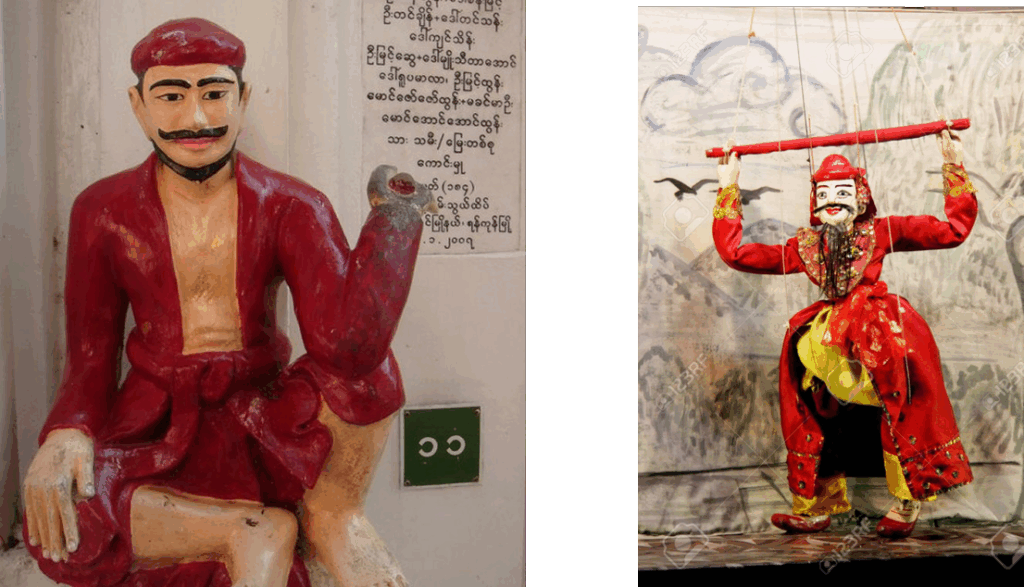
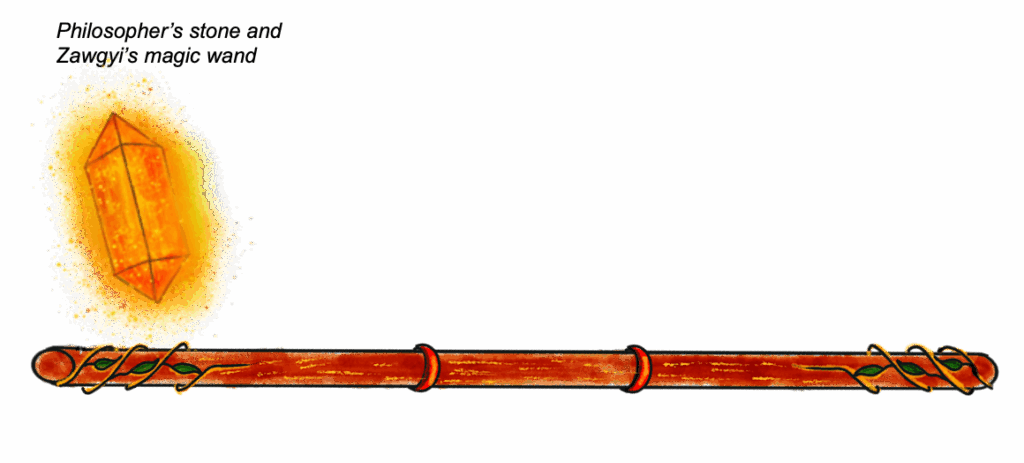
With this magical power, Zawgyi can obtain everything that is impossible for a normal human being. His power is beyond the limits that he can even become a King if he wants. Surprisingly, with this unlimited power within his body, he only wants peace in the enchanted forest, Himalayas, by searching herbs and treating patients suffering from severe illness. However, this successful and meaningful life doesn’t satisfy the needs of love and care for the young Zawgyi. Therefore, he brings alive “illusory females” with his magic wand from Nariphon trees that are inhabited in the forest.
Even though there is no historical record confirming his existence, only with the oral history about the alchemist in Myanmar, Zawgyi belongs to one of the unique kinds of puppetry, which is [a] 4,000-year-old art, widely known worldwide. Puppet culture in Myanmar started in the 11th century, which is in the Bagan era. However, it became famous in the royal family with a performance play in the puppet theater around the 15th century. In those periods, puppet figures, especially the story of Zawgyi, was one of the most widely known plays for the entire region.
Alchemy School Set Design
The conceptual and production design is guided by visual world-building principles that shape the spatial logic to ensure that key areas such as the communal space, the protagonist’s dormitory, and other symbolic locations reflect the legacy of Zawgyi.
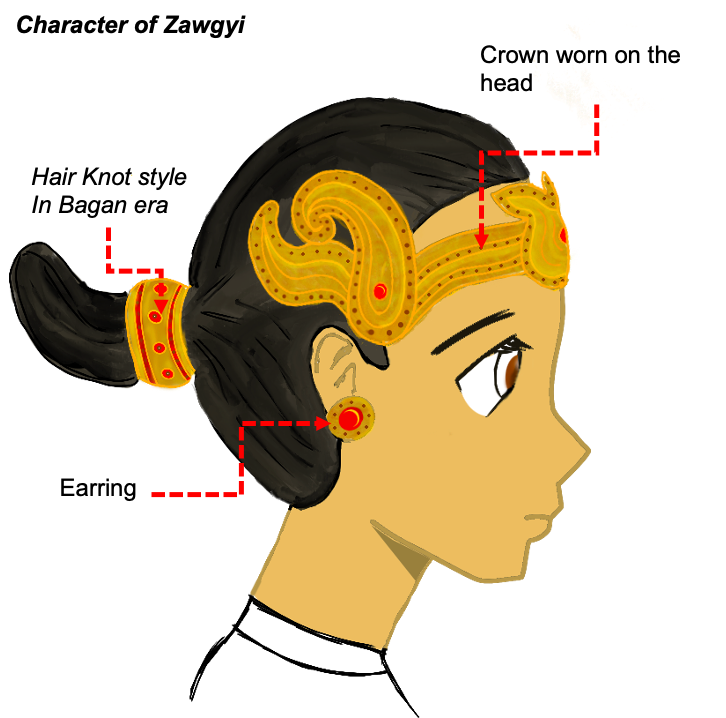
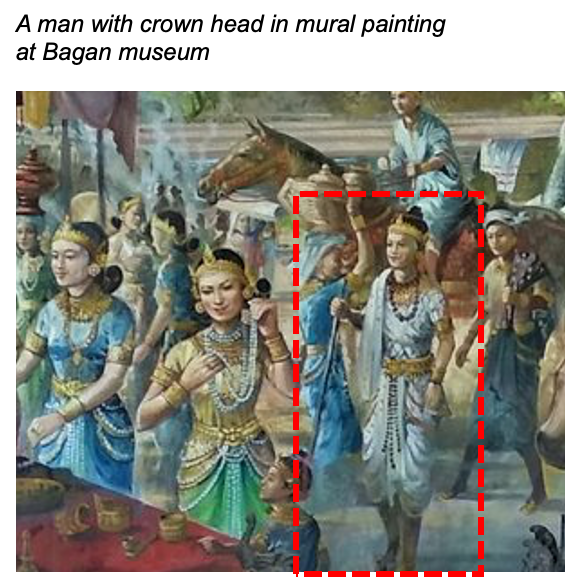
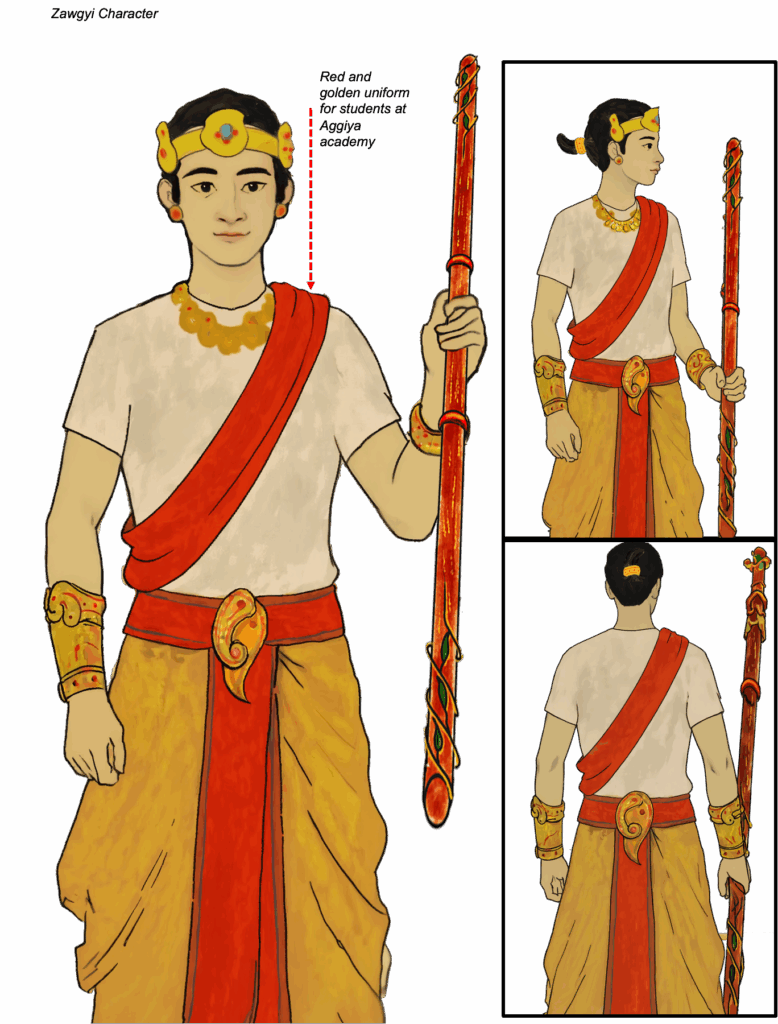
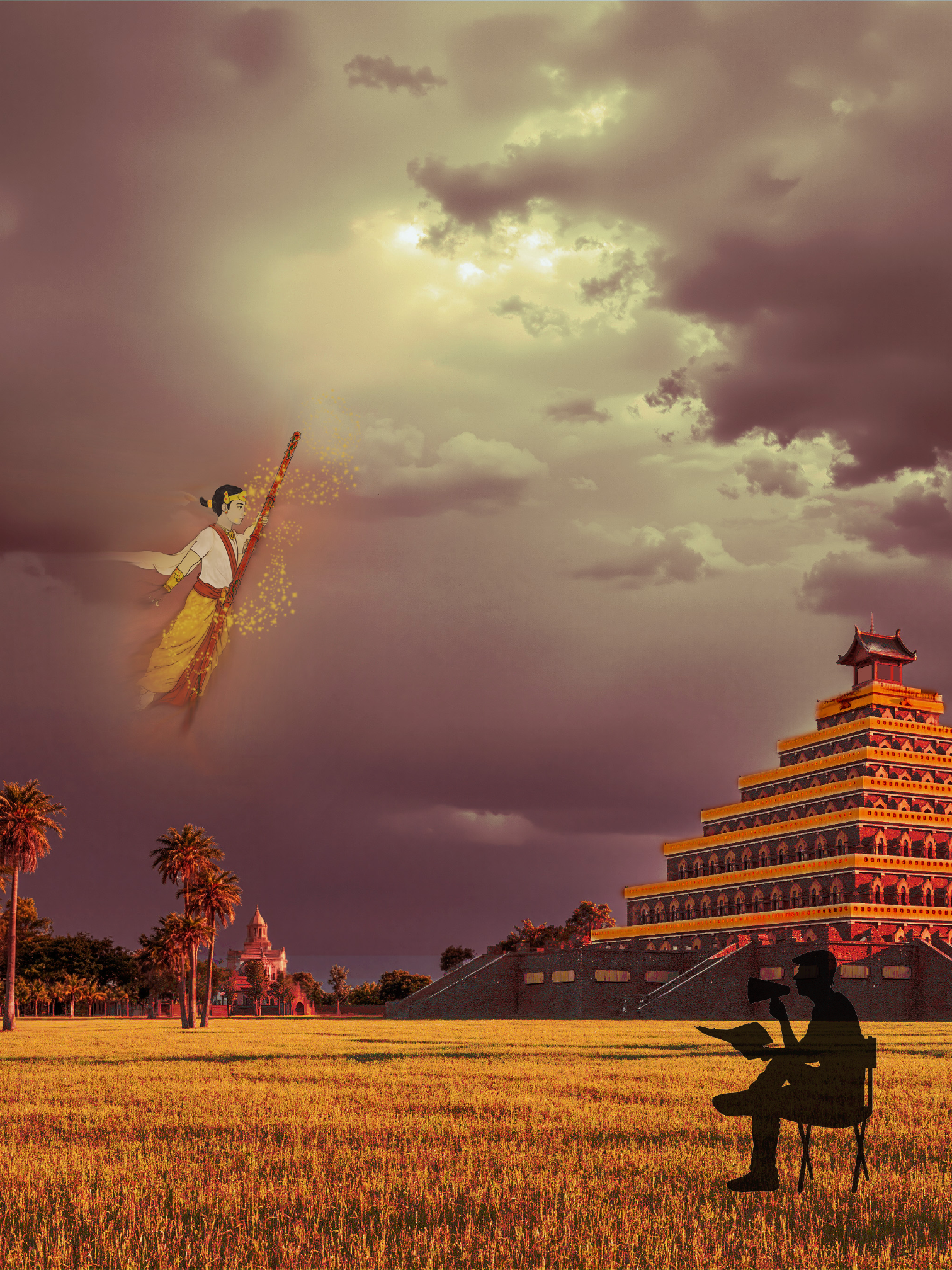
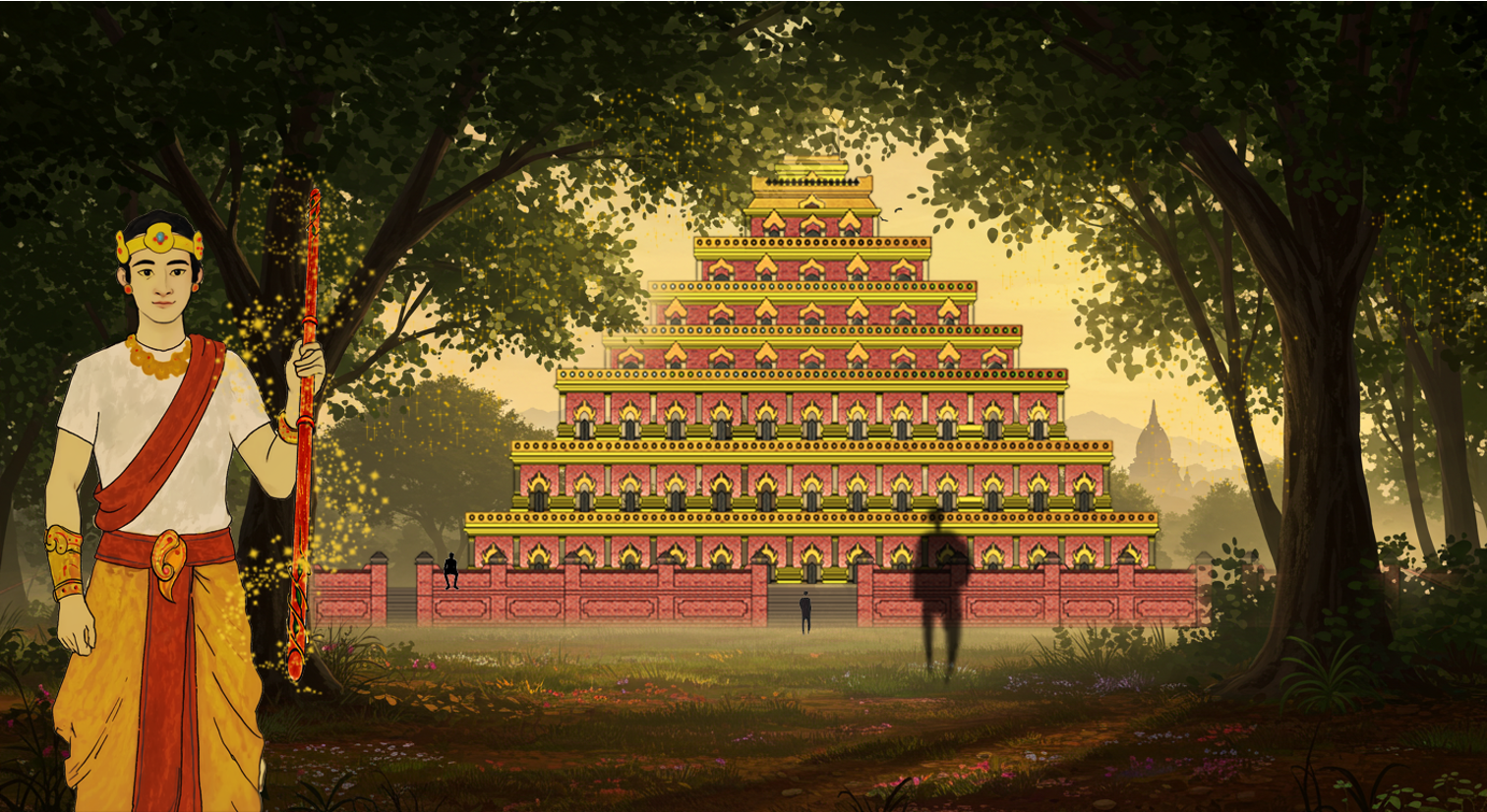
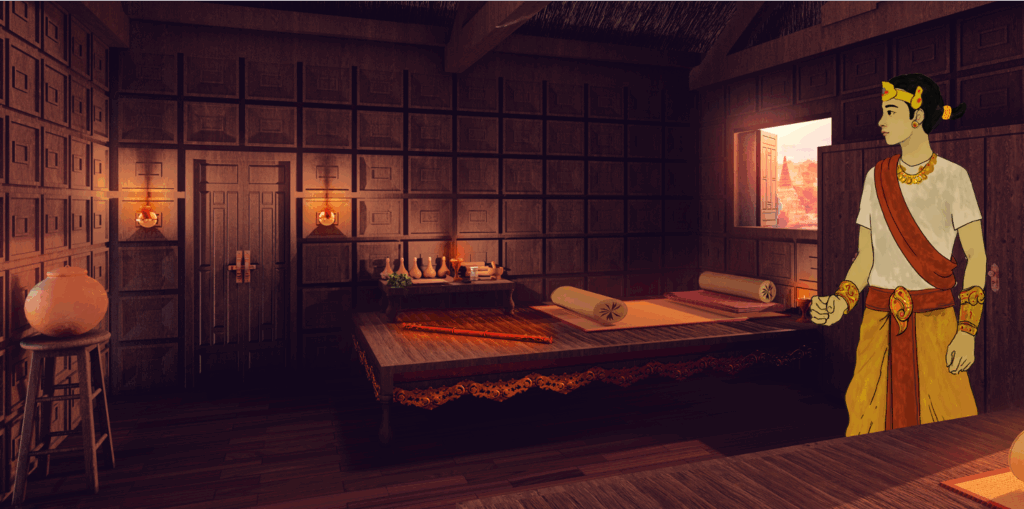
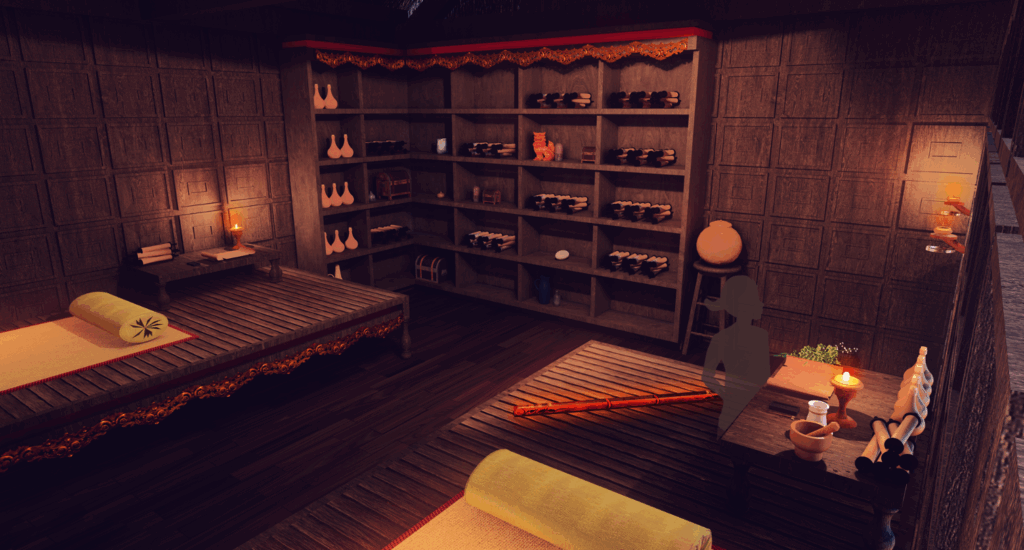
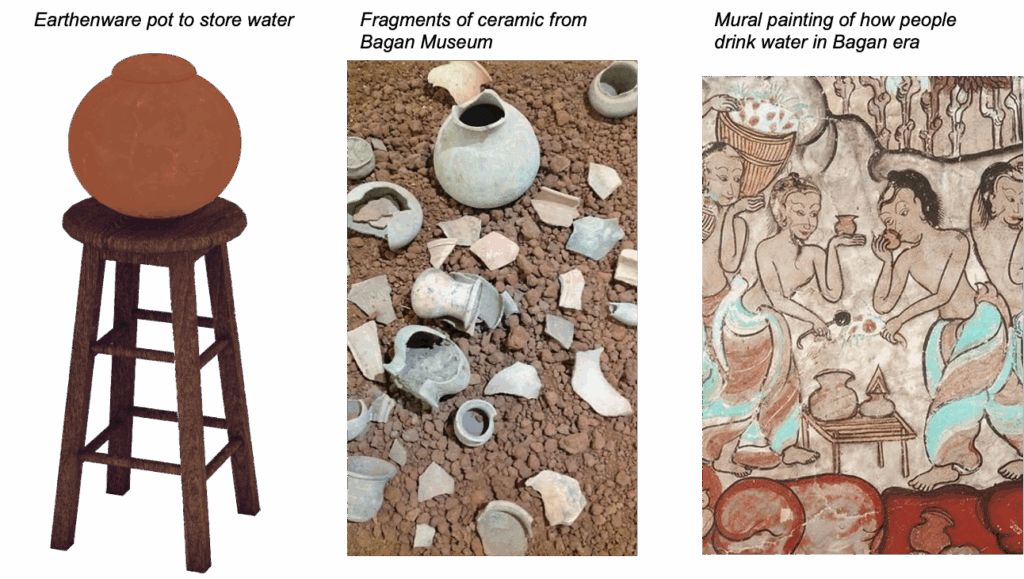
From the narrative about Zawgyi, the physical set design is drawn from his character identity and mythological elements referencing the historical background to provide believable and symbolically rich environments. Imagining Zawgyi attending school where his magic and knowledge are being taught, the fantasy set design will be based on the royal academy school which is located in the secluded Himalayas forest during the Bagan era. Visually, he and his classmates are identified by their traditional Bagan style robes in red and gold, which were described how Zawgyi wore in the folklores and magazines, representing their elevated mystical status. Among the magic items belonging to his classmates, Zawgyi will be the only protagonist with an elongated magical stick, which allows him to fly and travel beneath the earth and oceans. His dormitory will be surrounded with essential alchemical tools such as scrolls, medicine pots, and stone bowl for grinding herbs, which is used to craft pills and healing remedies. These objects reflect both his pursuit of immortality and his role as a compassionate healer. Despite his supernatural powers, Zawgyi is also portrayed as a humorous and kind-hearted figure, reinforcing the layered humanity of his mythos.
AGGIYA ROYAL ACADEMY
THE ENTRANCE GATE
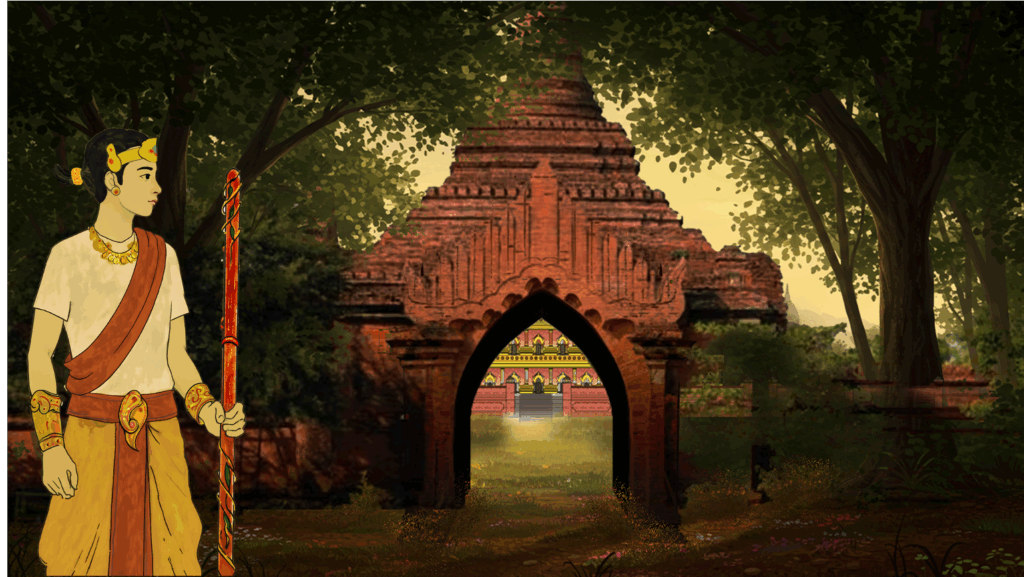
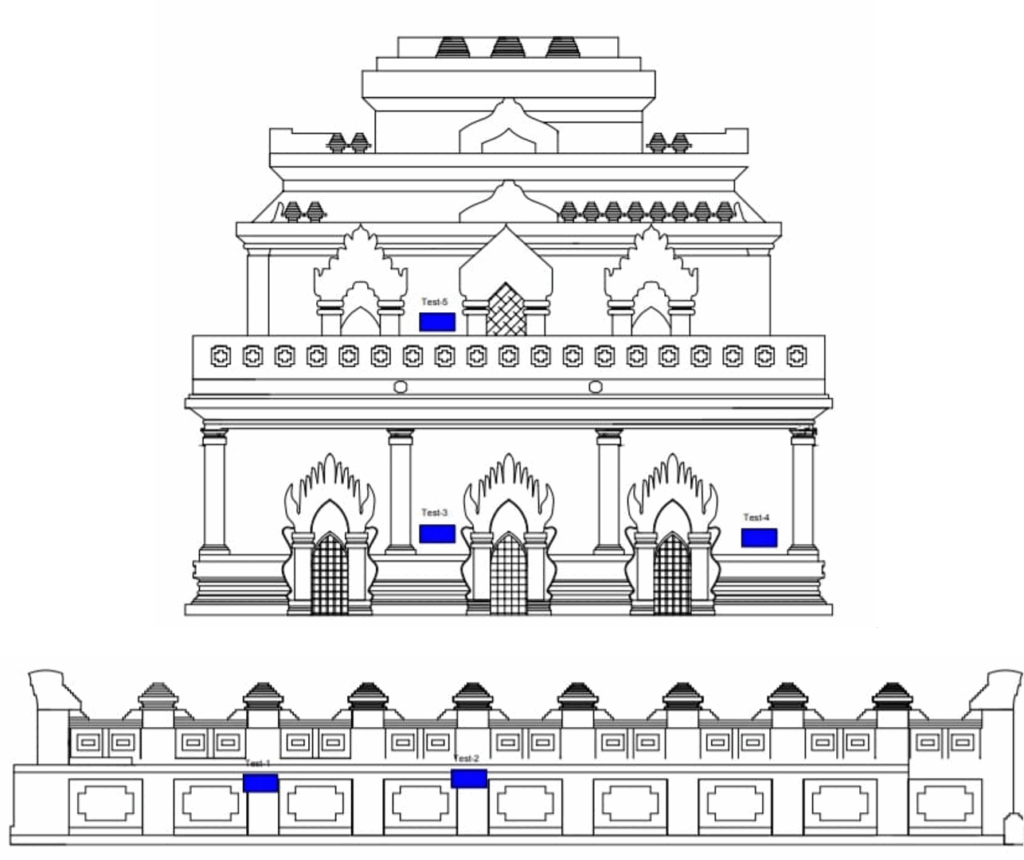
The name of the academy came from the definition of alchemy from the Myanmar language. As the setting is placed in the Bagan era, 9th to 13th centuries of Myanmar, the academy is built up with Bagan architecture styles. The entrance gate is from the common boundary wall between South Guni Temple and North Guni Temple. Within the narrative, people who got supernatural power can only enter through the gate and get to the academy. Normal pedestrians will only see this gate as a boundary between two temples. This site is being selected due to the distinctive architectural element of pointed arch which can be only found in temples around Bagan city. This visualizes the verticality and spiritual elevation of Aggiya Royal Academy which symbolizes the rise toward enlightenment with Aggiya, alchemy teaching.
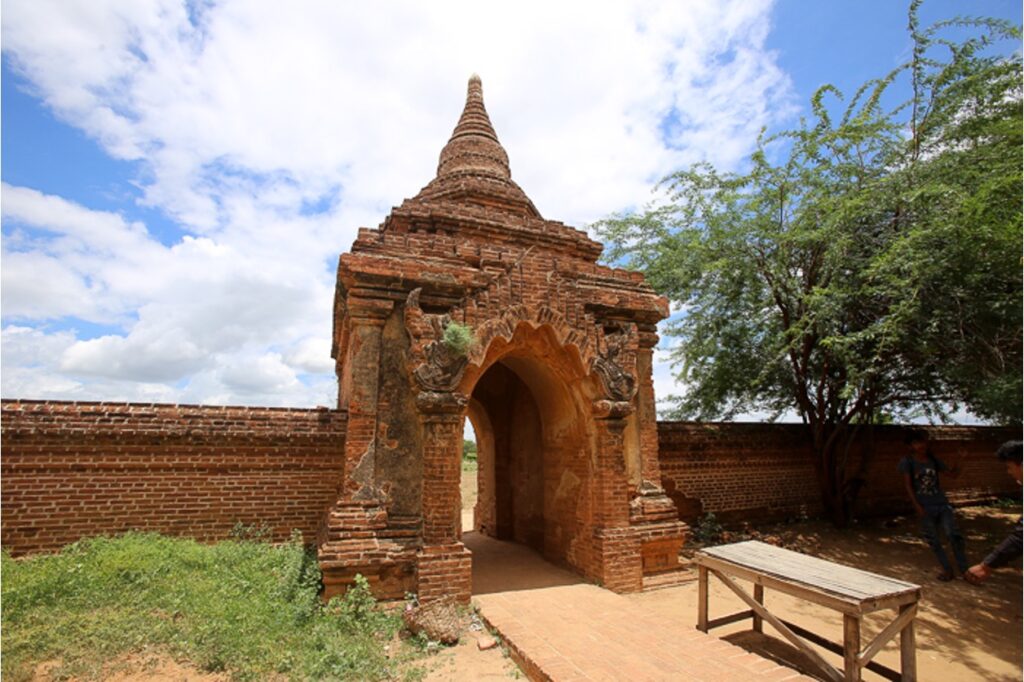
Along the inner curve of the pointed arch, projecting stepped brick layers are the shape of Yama fingers. The fingers gradually step inward, giving the pointed arch a ribbed or layered visual effect. They serve both aesthetic and structural functions, which Pang Yicun (2020) explained about how they help to stabilize the arch and accentuate depth and perspective. The name came from Yama, the god of death and judgment in Buddhist cosmology. As Buddhism became stronger starting from the Bagan era, those Yama fingers in Bagan architecture refer to the power of judgement against other religions during the Bagan periods, which is also aligned with the narrative about Zawgyi who rose from the dead to become the fully grown alchemist.
ROYAL ACADEMY BUILDING
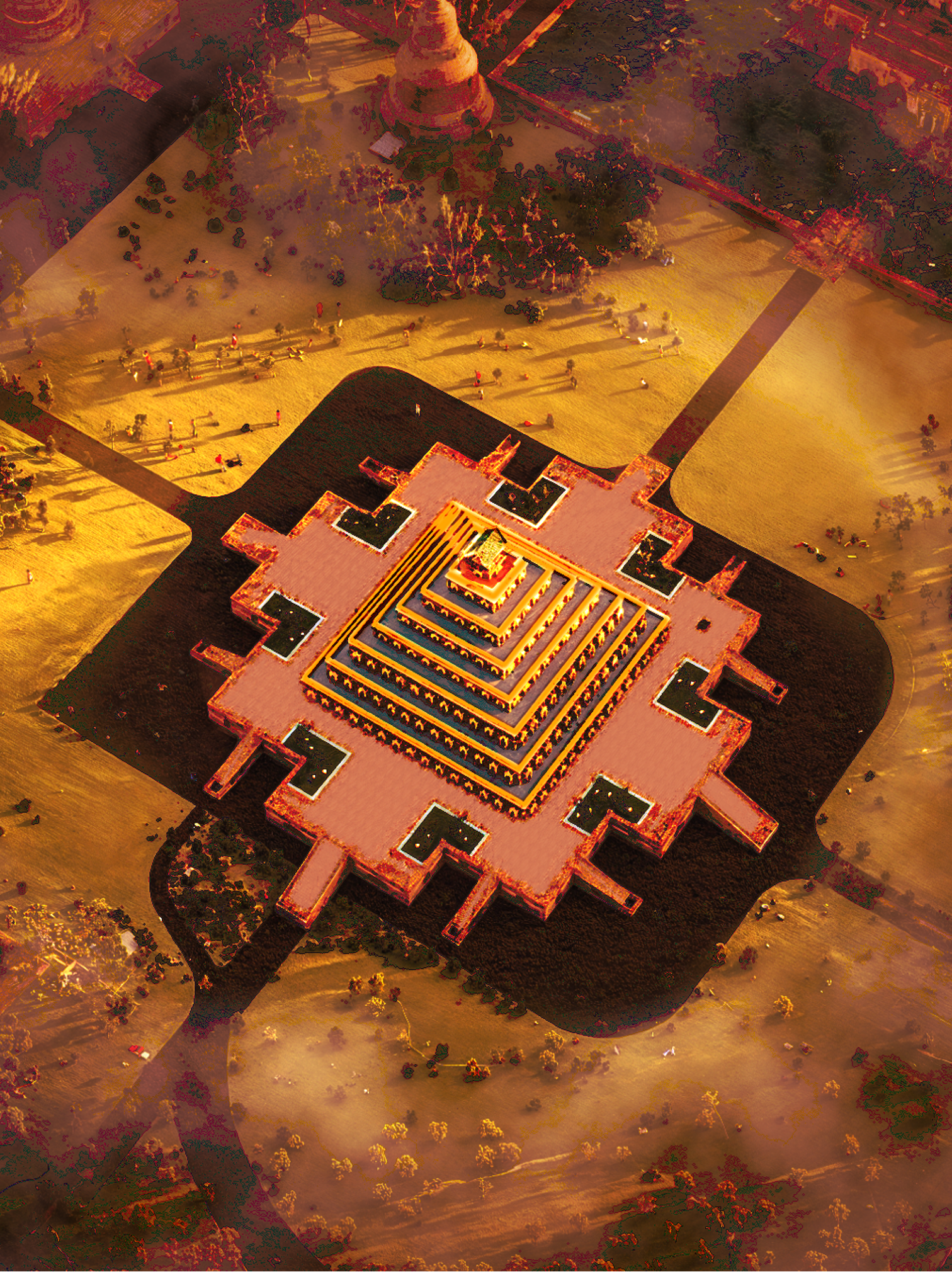
The building got inspiration from Ananda Ok Kyaung Monastery. It is the most famous and best-preserved brick monastery of the Bagan archaeological zone. The east of the monastery is Min Oh Chantha Pagoda and the western part of the building is Thetbyinnyu pagoda. In the past of the Bagan era, the princes and young men had to study literature and social skills in a monastery by the monks who followed the teachings of the Buddha. Most monasteries in Myanmar’s later history were made of wood and thus did not survive. The Ananda Monastery is rare and enduring, made of brick and stucco. It provides a rare surviving example of monastic architecture in the Bagan era.
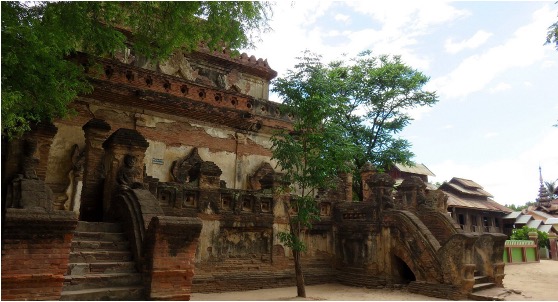
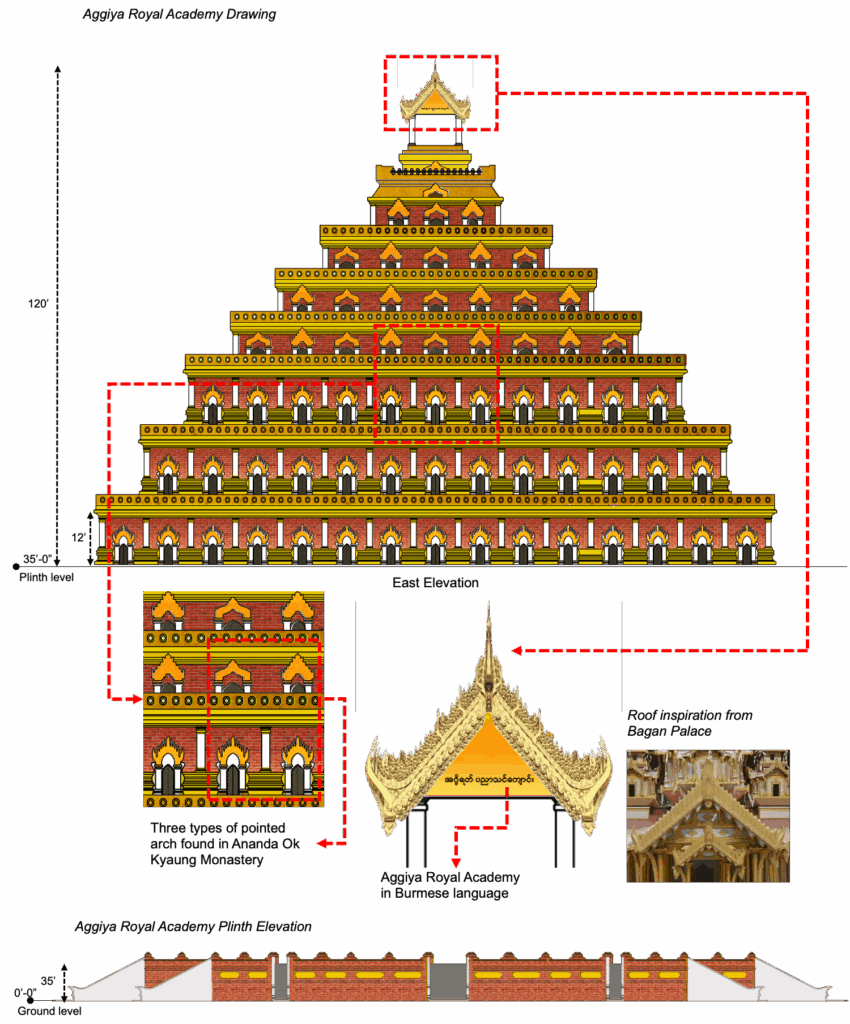
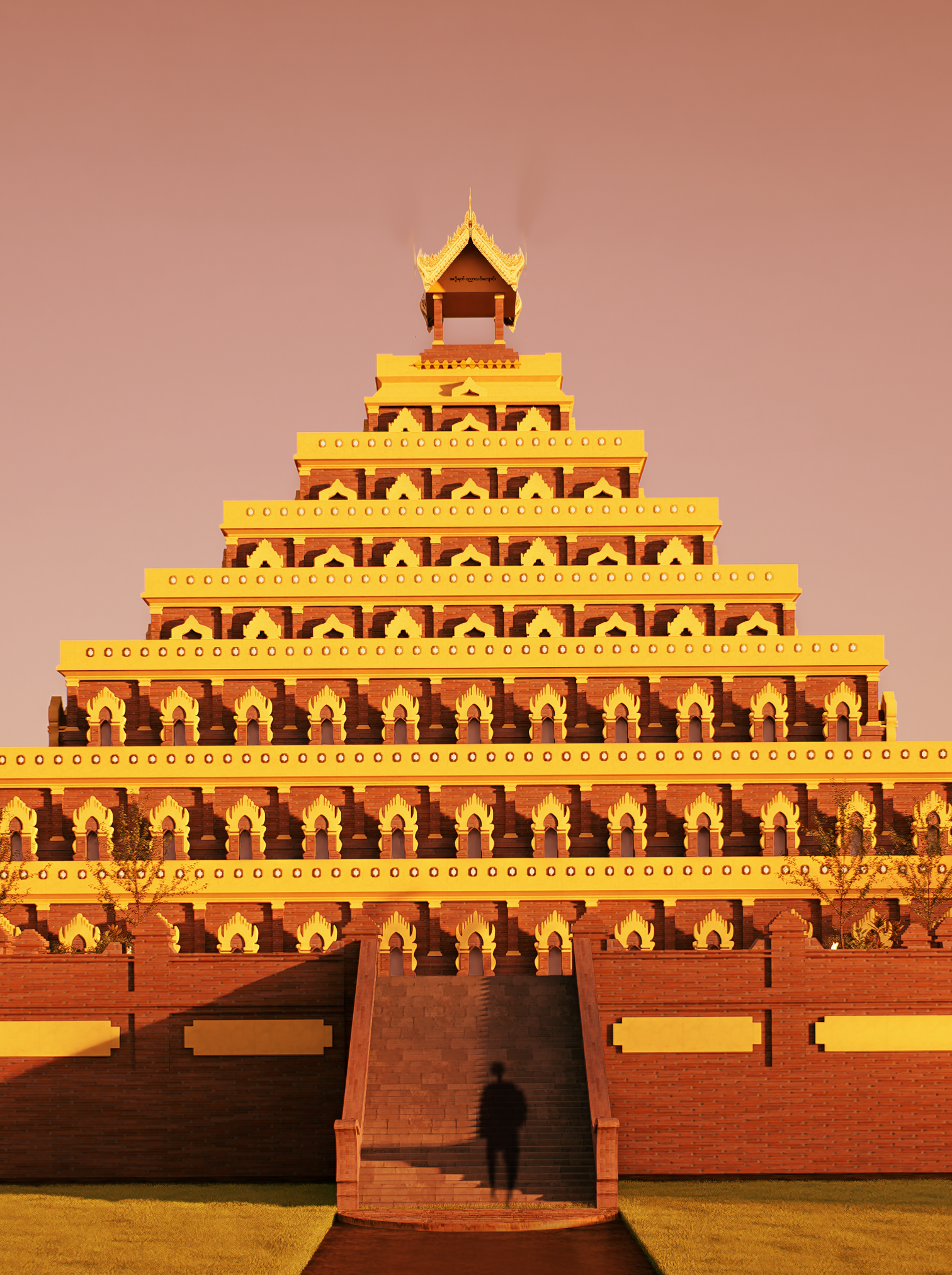
However, the original monastery’s spatial capacity and vertical layout were not enough to meet the requirements of the Aggiya Royal Academy. As a result, the monastery was redesigned with digital effects to feature broader span areas with seven levels, and an elevated plinth level to enhance functionality and scale. By doing this, the academy will be portrayed as a sacred place for the alchemists to study alchemy in the academy. Four types of arches will be found at each of the entrances to the building.
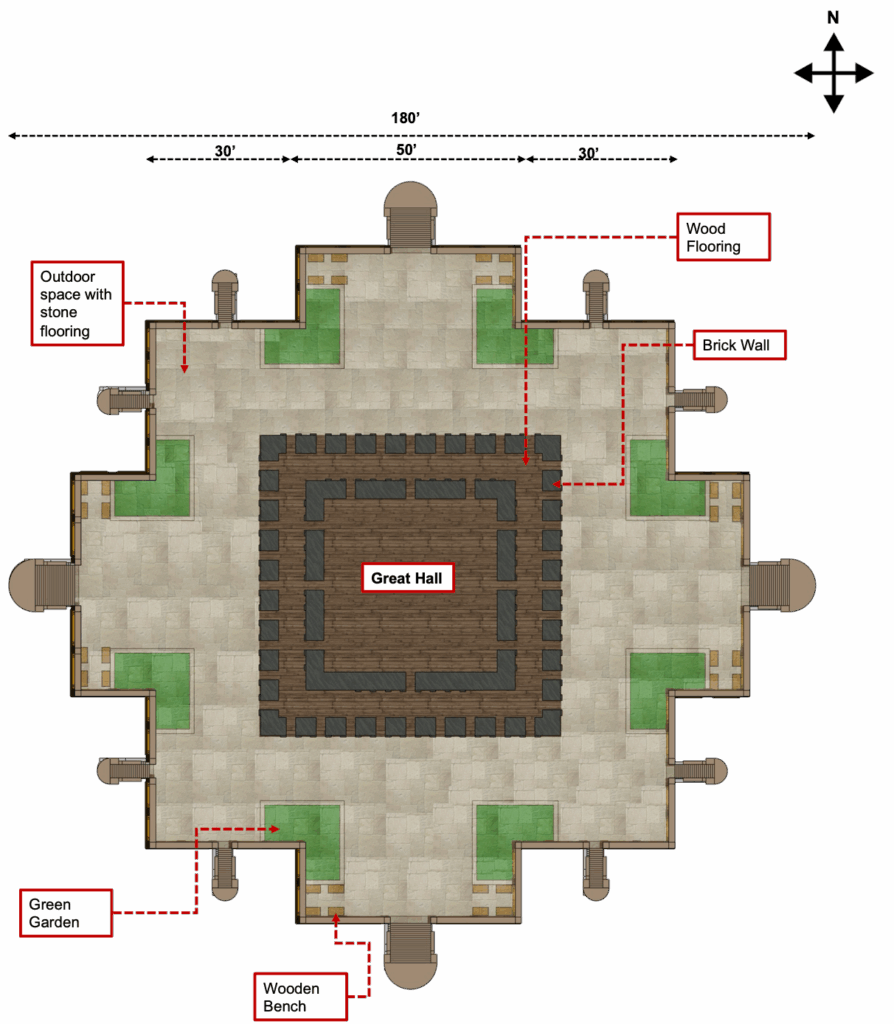
Taking every detail note from Bagan architecture, Aggiya Royal Academy is designed with arches by adding 15 inches span between each of them. These arches also provided natural ventilation and light within the interior. The ceiling height for each floor will be 12 feet high in order to avoid suffocating due to the massive brick structure. Ground floor has a great hall in the center for the social events and ceremonies. Its outdoor space is 30 feet wide for social interactions. To access this raised ground level, 3 staircases are added on each side of the location. First to seventh floors are surrounded by a 10 feet wide verandah, serving as a transitional space between the interior and exterior environments. Roof terrace is raised on top of the building for a private outdoor space. Motifs are adopted from the art created in the Bagan architecture. Golden and brownish colour themes are used to reflect the styles in the Bagan era.
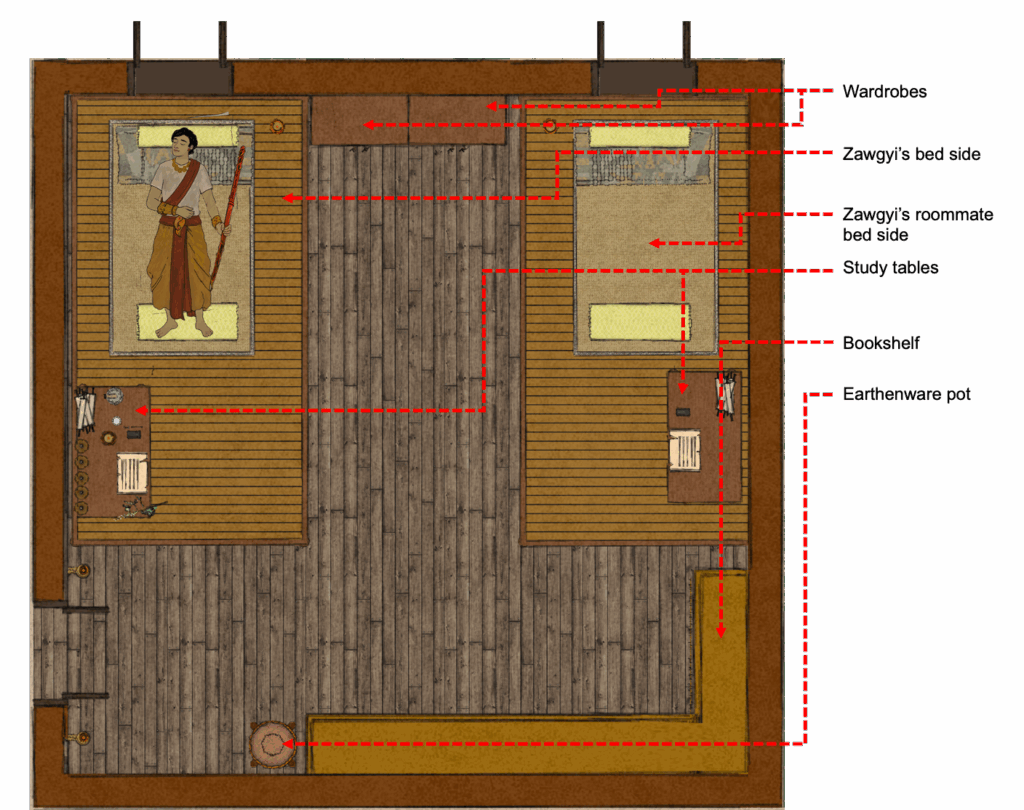
ZAWGYI’S DORMITORY
In the narrative, Zawgyi is portrayed as a devoted alchemist with his humor, warmth, and exceptional intellect as the academy’s most brilliant student. Despite the academy being a sacred, male-only space, young women were fascinated by his fame and charm by secretly watching him from a distance. However, Zawgyi remains emotionally detached and focuses solely on his passion for medicinal plants and alchemical knowledge.
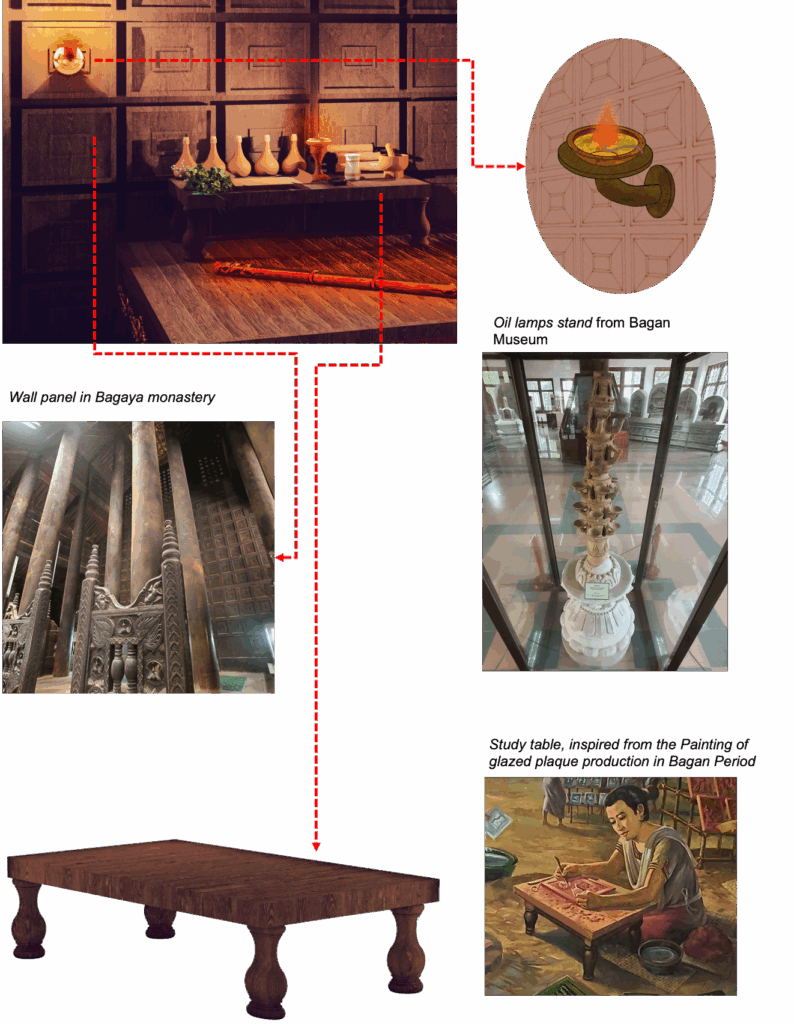
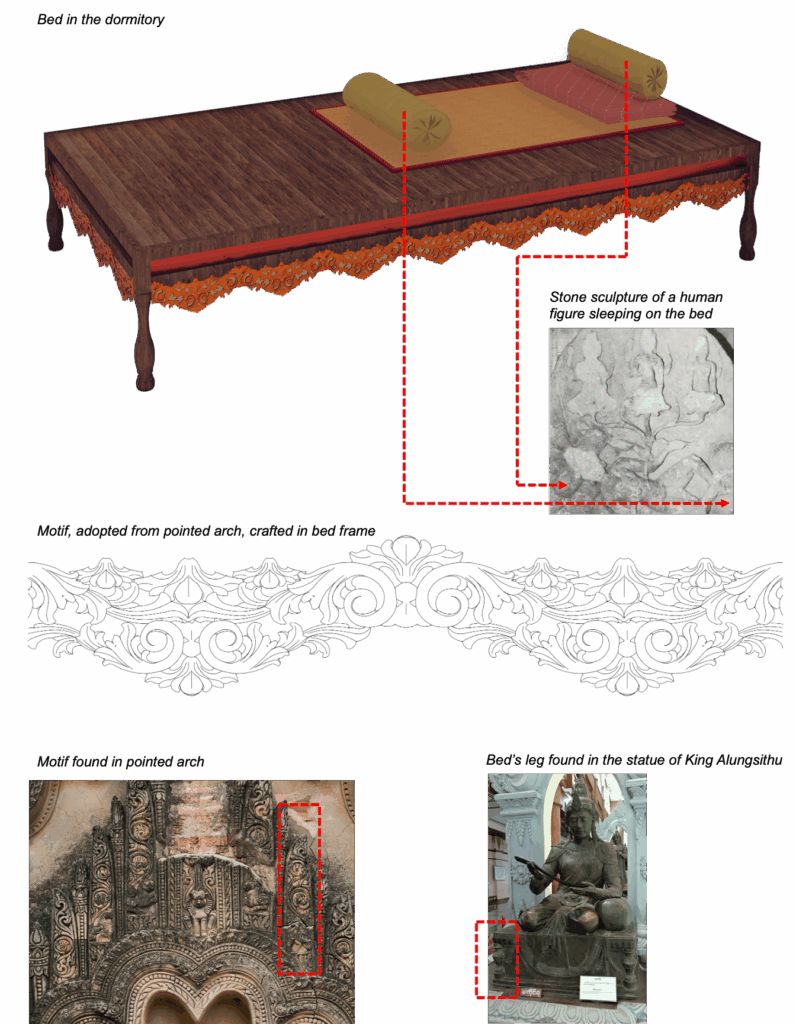
Even though temples and pagodas were proudly built up during the Bagan era, domestic structures give challenges because people used wood, bamboo, and thatch for their interior furniture and decorations, which have not withstood the test of time. Therefore, the dormitory set location is chosen at Bagaya Monastery, which was built during the Inwa era and is well-known for its detailed wooden architecture and earliest well-documented historical record. As there is only a hall in the monastery, the dormitory is constructed in the studio with a wooden structure using dark wood, reflecting the Bagaya Monastery architectural style.
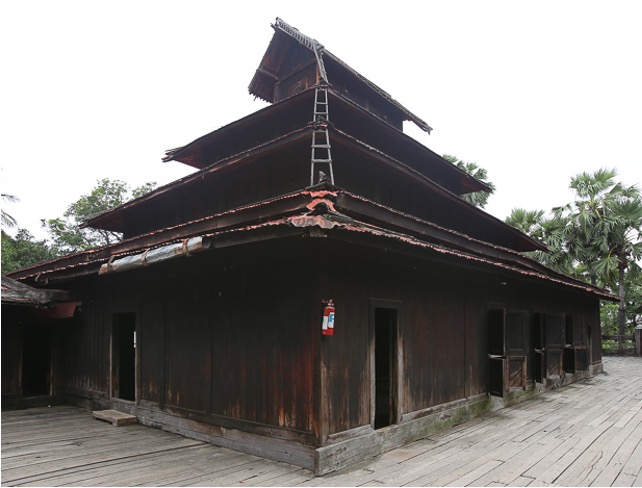
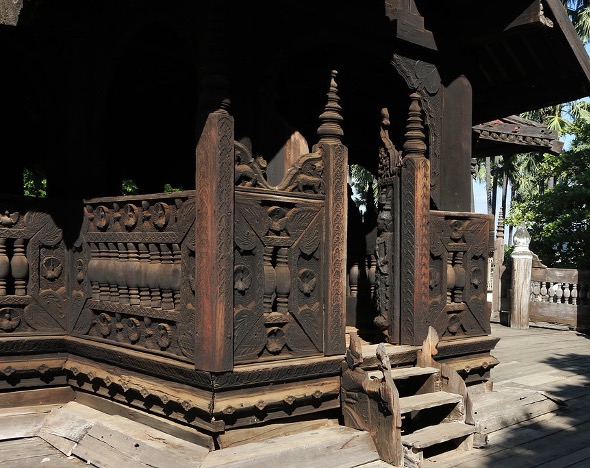
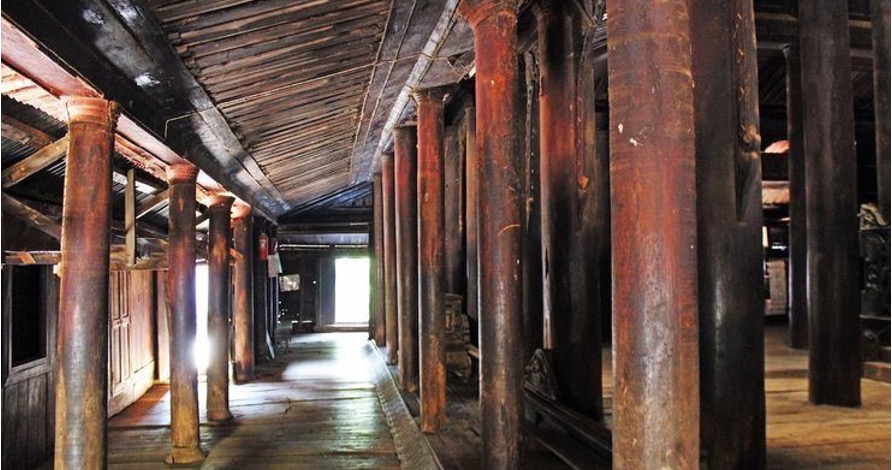
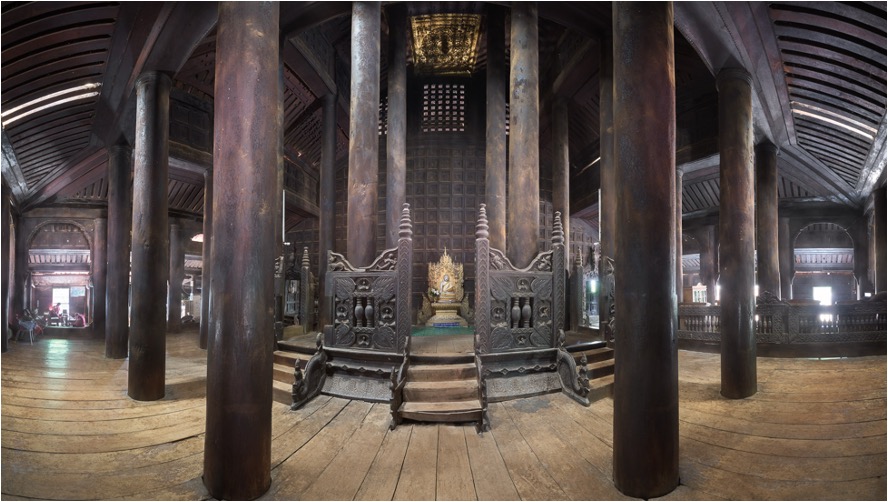
In the narrative of Zawgyi attending the alchemy school, each dormitory building contains four attached bedrooms, accommodating two students per room. The academy has 20 dormitory buildings, located behind the main campus, deep within the Himalaya forest. Zawgyi’s dormitory is situated at the far end of the academy, near the stream of the Irrawaddy River, which runs along the eastern edge of Bagan. This calm and quiet riverside, shaded by the mystical Nariphon tree, is where Zawgyi resides and studies alchemy in isolation.
NARRATIVE INTO VISUAL WORLD
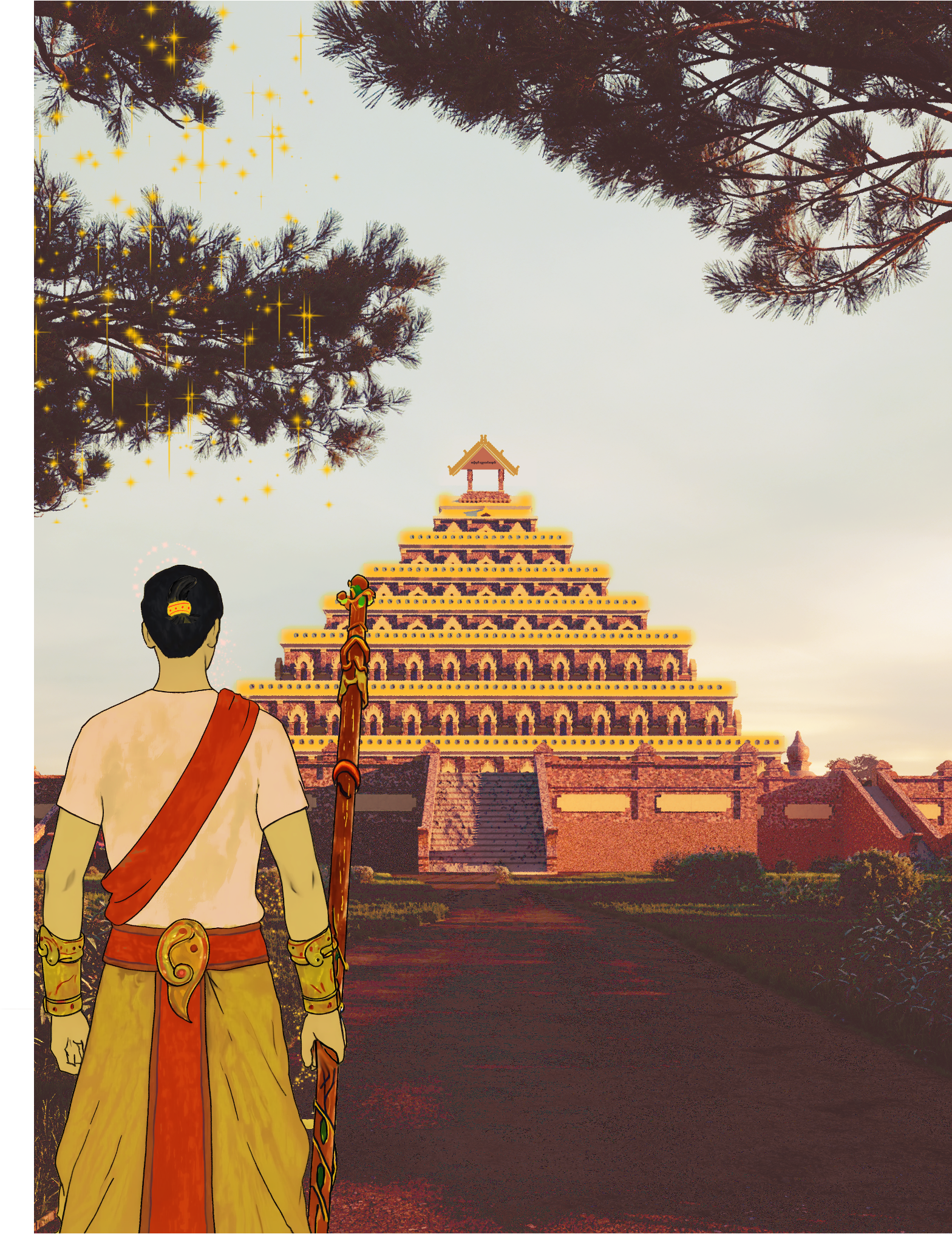
The world of Zawgyi is brought to life through fantasy set designs which are enhanced by digital effects. The narrative is set in the Bagan era, a period when the legend of Zawgyi began to rise in prominence. The design captivates viewers with the surreal and enchanted qualities of the story while ensuring that the environment remains culturally and historically grounded.
The Aggiya academy where Zawgyi studies alchemy is created using architectural principles and aesthetics from the Ananda Ok Kyaung monastery. Elements such as pointed arch, vaulted corridors, brick textures, oil-lamp, and traditional Burmese spatial hierarchy are incorporated to provide the spiritual and scholarly atmosphere of the time. The design reflects the mystical undertones of his journey by creating a set that functions as both a narrative backdrop and a symbolic meaning of the character’s internal world.
The narrative and spatial function provides the sense of wonder and act as narrative frameworks through form and atmosphere. Through the thoughtful combination of historical references and fantasy storytelling, the set brings the narrative into a visual world with a meaningful presence that draws the viewer into a reimagined past where the myth of Zawgyi transfer into reality.