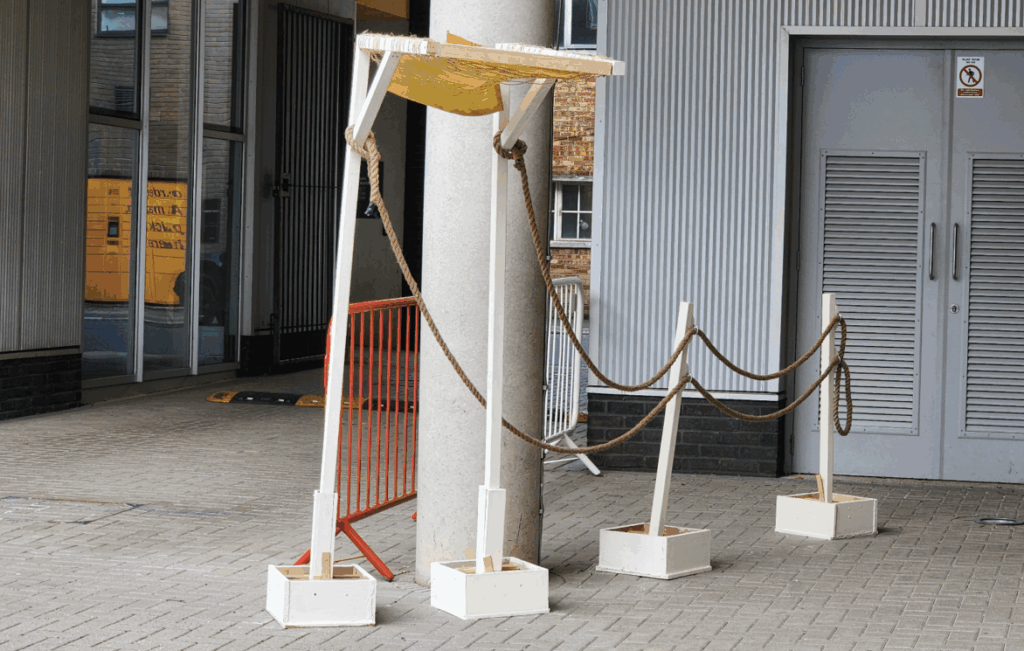
A 1:1 design invention revolutionizes convenience by providing on-the-go solutions. With user-centric features, it enhances efficiency and usability in everyday scenarios, catering to different needs and addressing its matters of concern with its innovative design and portability.
The Site
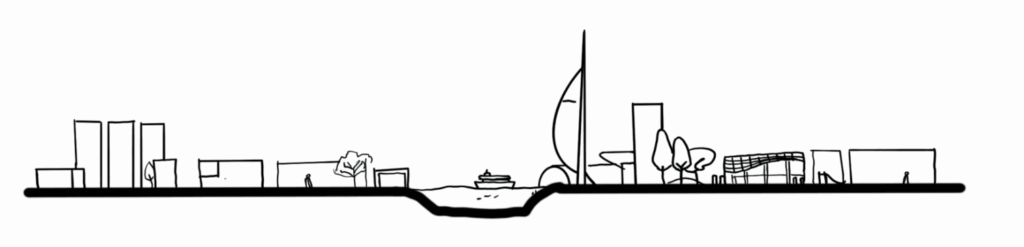
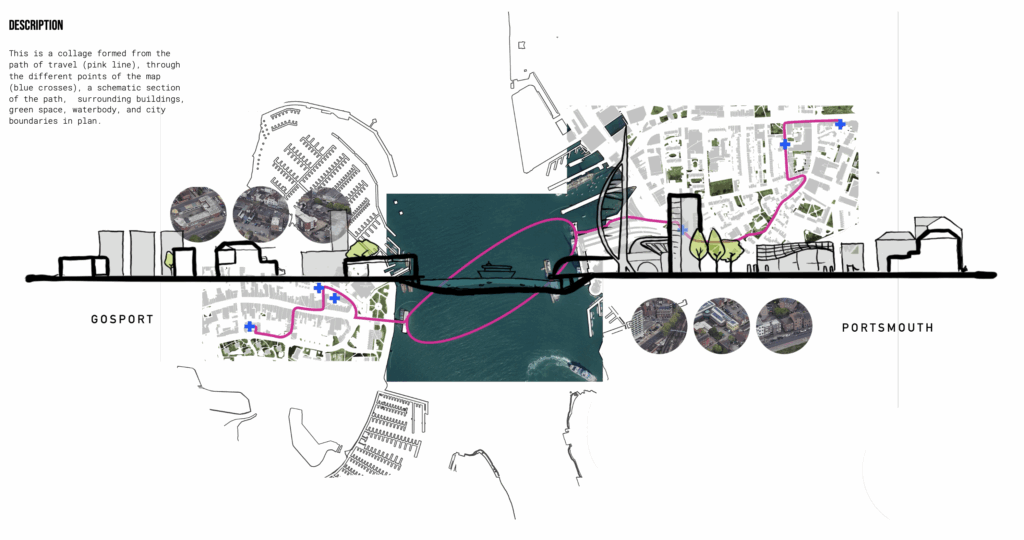
From Portsmouth to Gosport
Portsmouth – from “the Victory road” to “Mill Pond Apartments”
Gosport – from “Mumby Rd (A Lees Bricklaying Contractors)” to “the corner of S Cross St and Coates Rd”
Collaborators
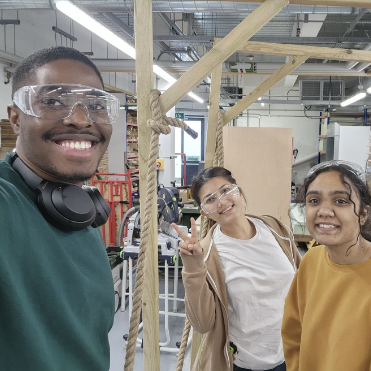
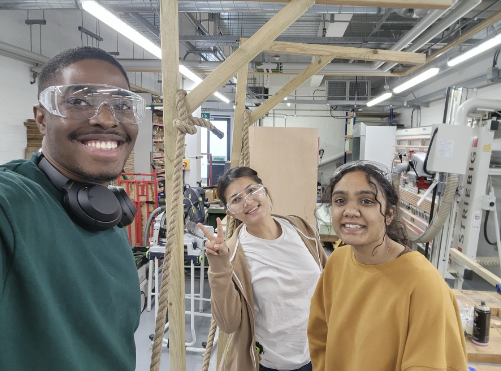
Kyawt Hmu May Khin (interior design)
Mobolaji Sultan Esere ( landscape and urbanism)
Aayushi Patel (interior design)
Method
Physical site visit, Mapping, Photos, videos, 3d scans, panoramas, Visual and sensory recording
Purpose
To observe the site’s current conditions both tangible and intangible. The observation and analysis were classified into these major categories;
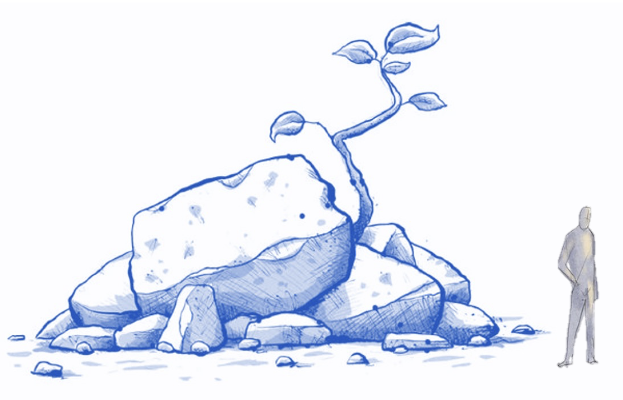
Resilient
The ability to recover from setbacks and adapt to change.
Care is not merely a human activity but a relational practice involving multiple entities, including non-human agents.
It broadens the understanding of resilience to encompass ecological systems and technological networks, emphasizing the interconnectedness of all forms of life and matter.
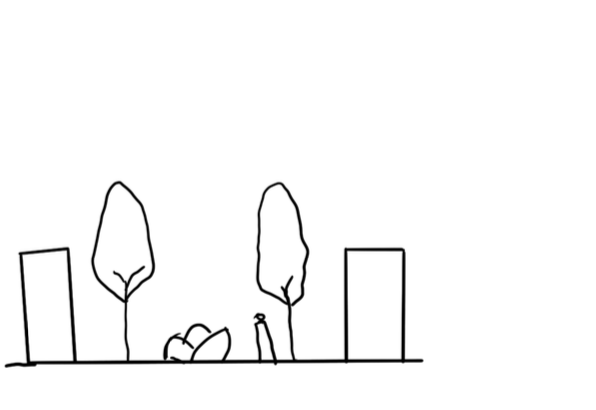
Spatial design
A space would become more inclusive and resilient if care were integrated into its design. For example, the design for adaptive and responsive environments meeting the needs of human- to-non-human users upholds the principles of sustainability and well-being.
It is the alignment that is apparent with the approaches of resilient design, which creates spaces with the capacity to withstand and recover from environmental, social, and economic stresses.
Habitat
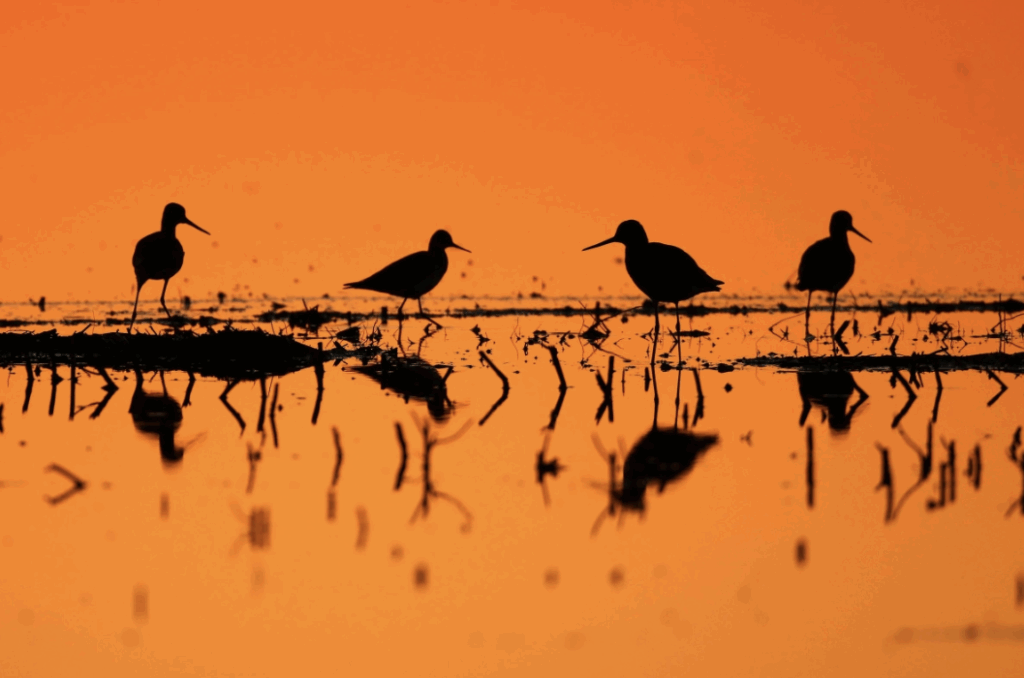
Habitat destruction and loss of biodiversity are inextricably woven with human activities. As a result, most forests are cleared to give way to urban development, the species lose their homes and sources of food, pushing them closer to extinction.
Some other ways of saving the endangered species are by creating wildlife reserves that preserve the habitats from further destruction by breeding endangered species and reintroduce them into homesteads, as outlined on the numerous affected areas by nativeflower.co.uk.
Restoring habitats manage the healthy ecosystem that will surely maintain the natural processes that are of basic importance in supporting life on Earth.
Social
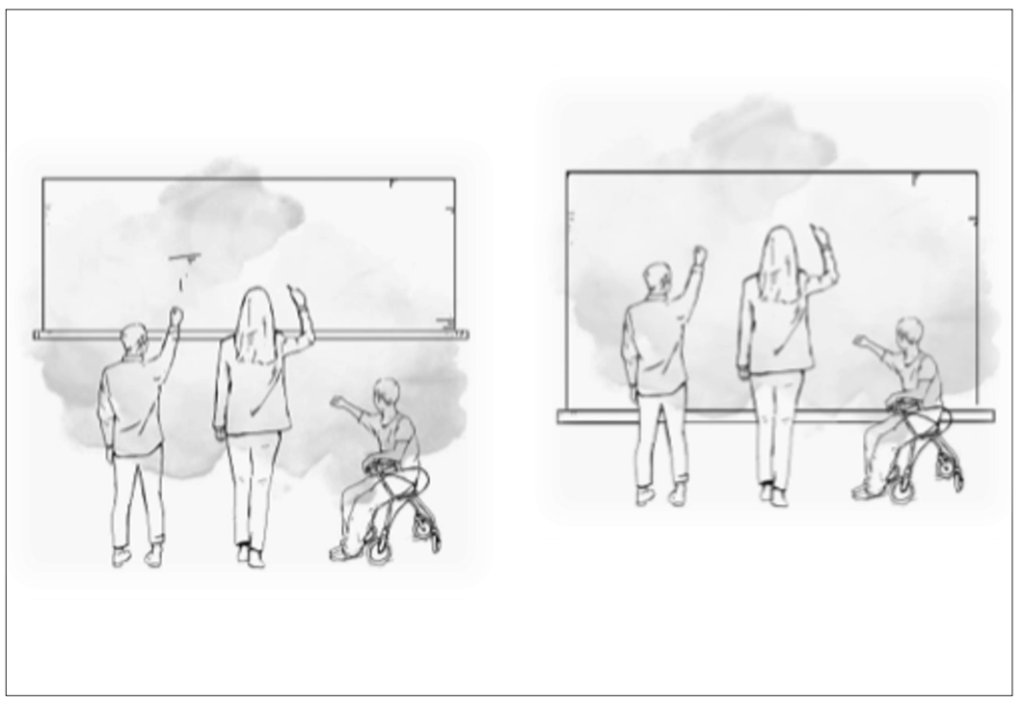
With a principle that prioritizes creating environments and products that accommodate the diverse needs of all creatures, design inclusivity ensures that everyone can access, use, and benefit from these designs without discrimination or inconvenience.
Not only do these improve the quality of life, but, in fact, they lift the overall experience for all users and pave the way for a more inclusive and participatory society.
One just has to think of providing access and use through it by eliminating barriers that prevent from inclusion. An interaction that is more intuitive and comfortable to use enhances the user experience in this society.
Design Interaction and Development
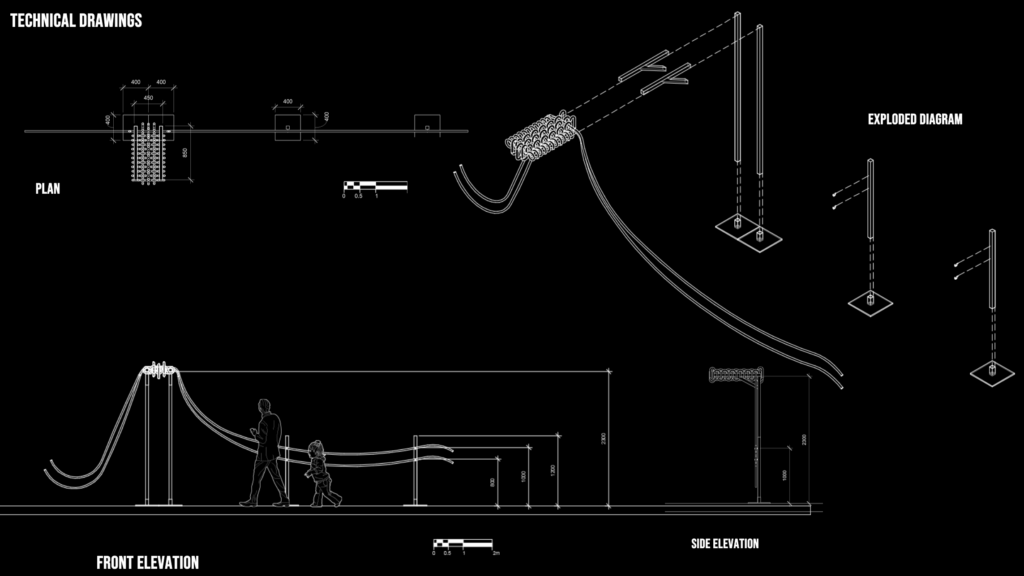
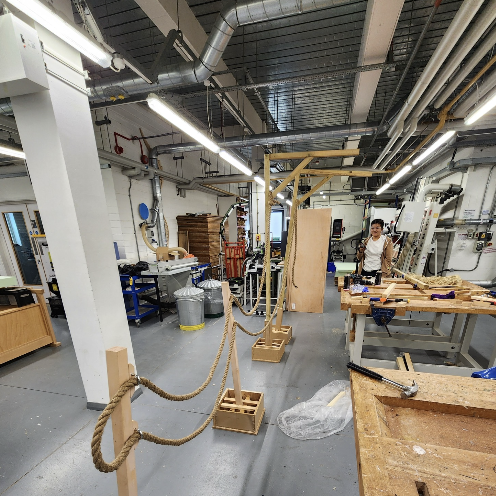
The base idea started with the intention of inclusivity. An intervention which caters to both human and non-human entities. While discussing, we realized that a handrail caters to our matter of concern. It would consist of handrails at 2 different heights for people of various heights.
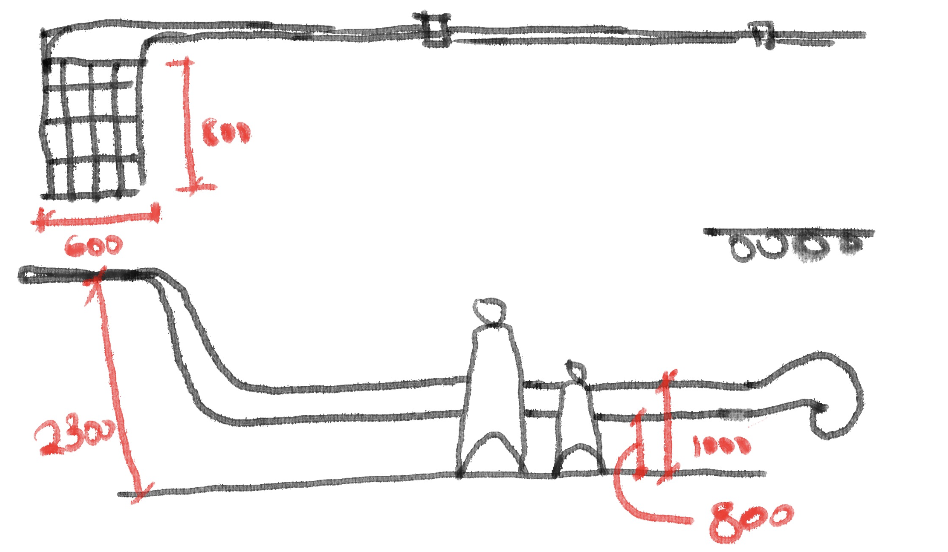
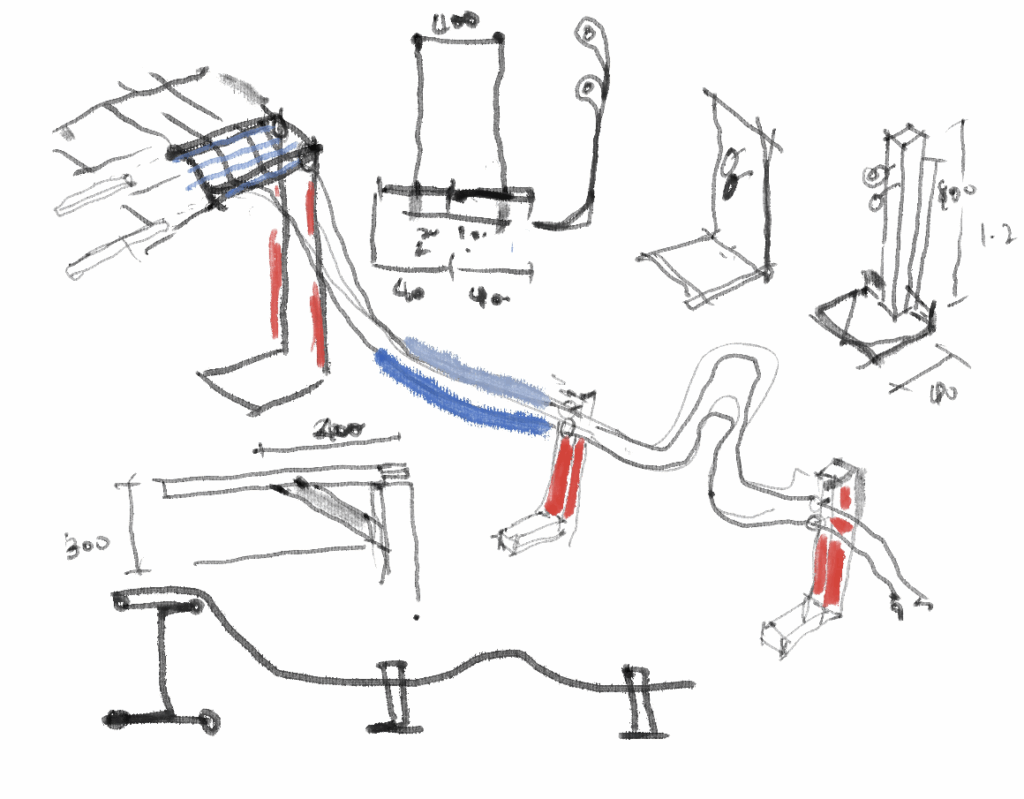
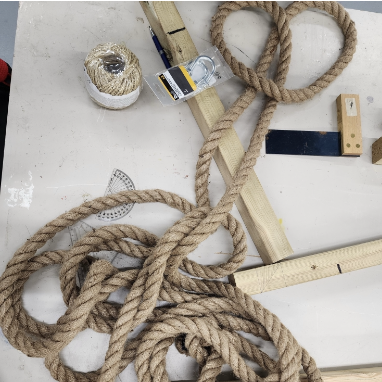
The handrail will also have a cluster of ropes which will act as feeder for small birds and animals. Using wood and rope as the main materials which is significant to both Gosport and Portsmouth’s history and culture.
The initial idea was to dye the ropes in 2 different shades of blue which signifies the colour of Portsmouth and Gosport and the stands in red.
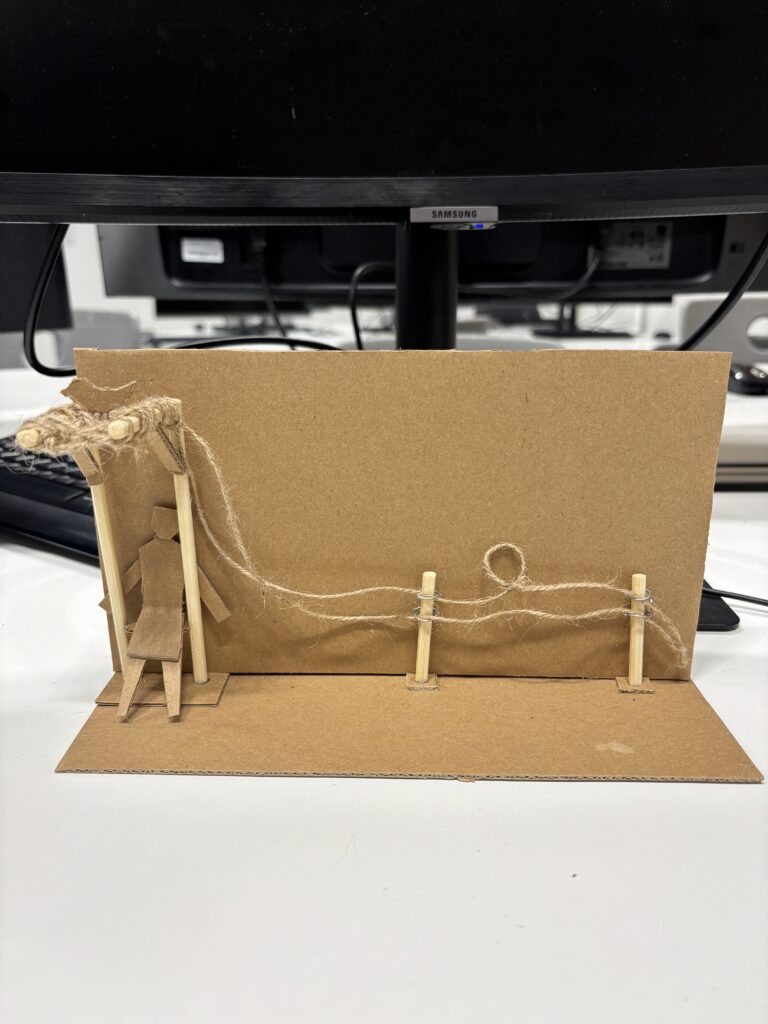
Prototype
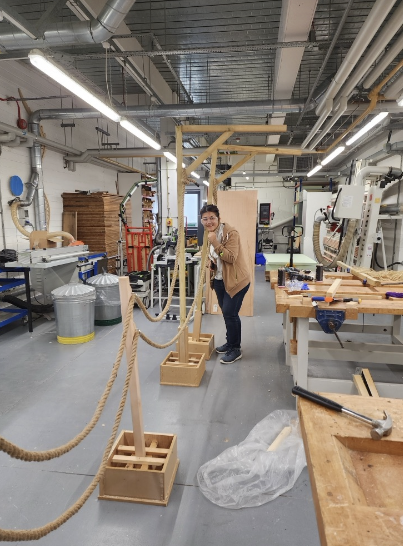
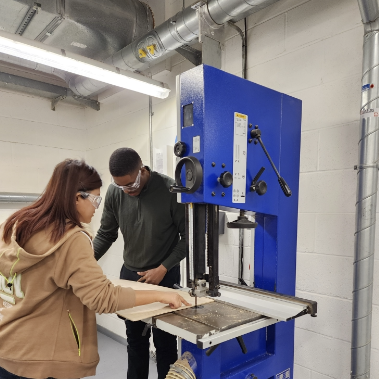
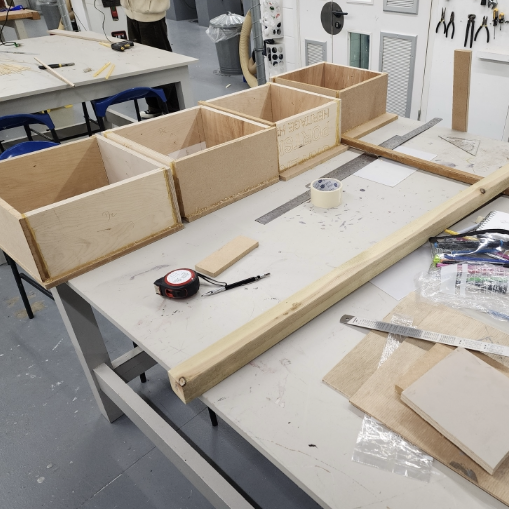
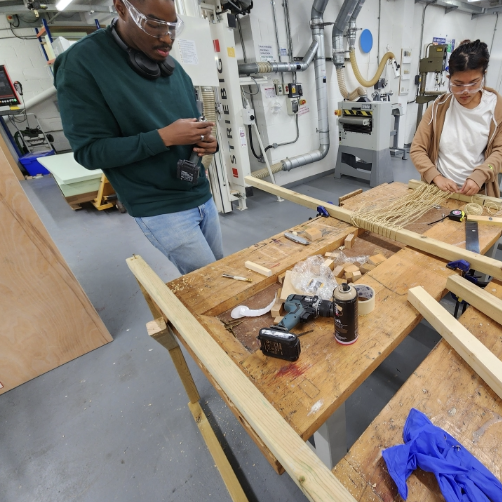
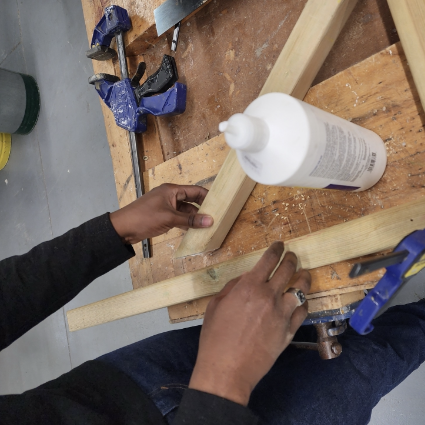
• The construction of the installation taught us multiple things. Various materials were explored along with various techniques.
• The first initial task was to make molds to set the concrete base. After making it we realized, the base would get heavier than expected, which would decrease the chance of mobility of the installation, making it far less resilient. Hence the molds then would be planters and would have frame structure to support the stand.
• Next we constructed the stands. It took us multiple attempts and different techniques to stabilize the stands and the frame for the feeder.
• It was then decided to keep the finishes of the installation in monochromatic colors to give it a more mature look.
Transportation
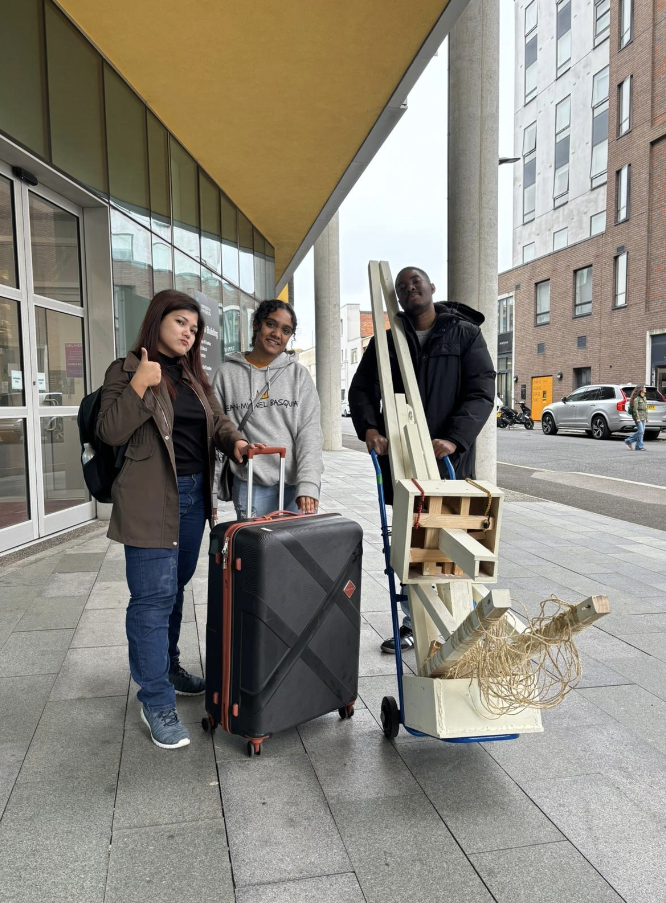
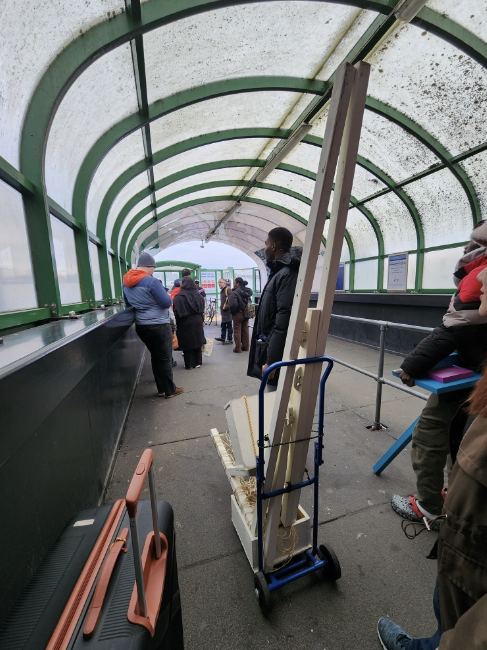
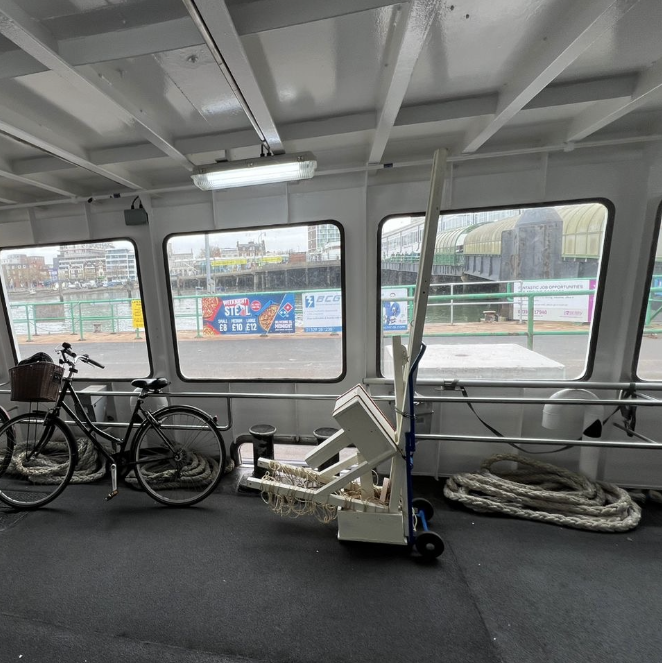
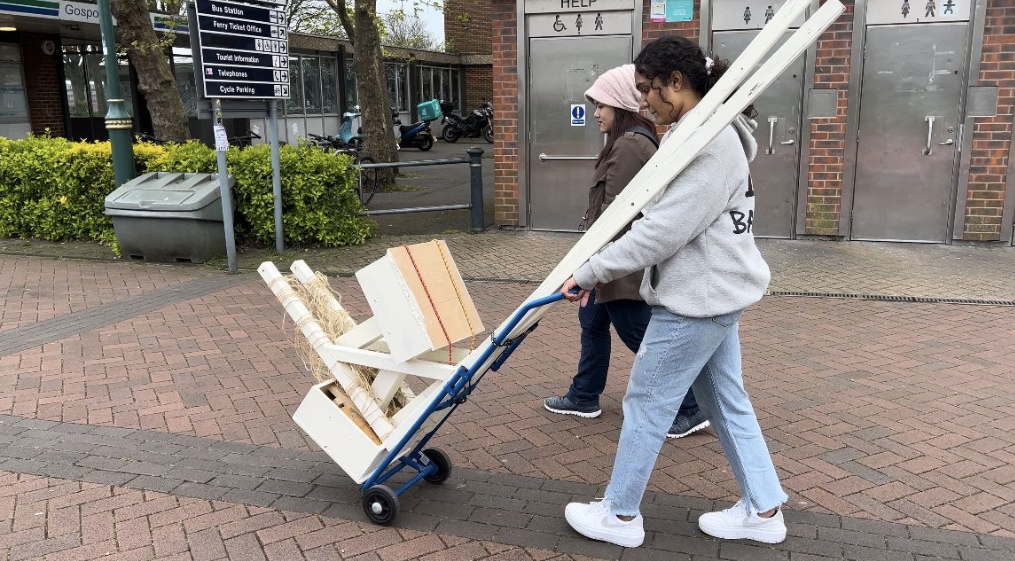
• Transporting the installation to and fro Gosport and Portsmouth was a big challenge.
• The stands and the 2 of the base boxes were tied in a trolley while the parts like the other 2 base boxes and ropes were stored in a luggage bag.
• While taking it to ferry we sure received some curious looks and while returning a few came up and asked what the whole thing was about.
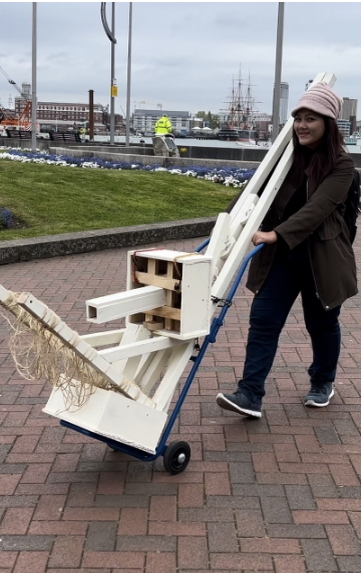
Installation
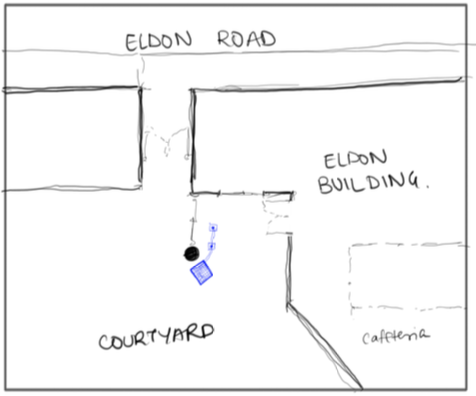
1. In Eldon courtyard
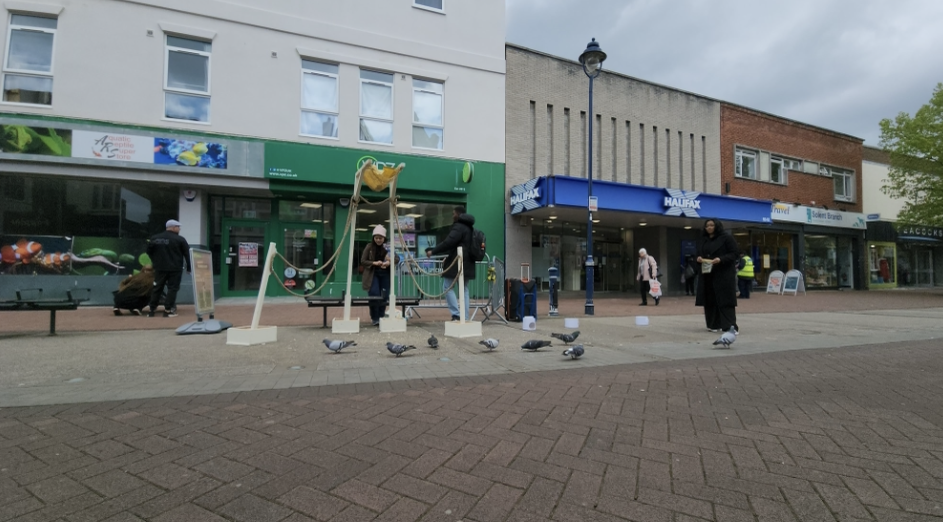
• When placed near the back entrance of the cafeteria, the students observed the installation but only a few interacted with it.
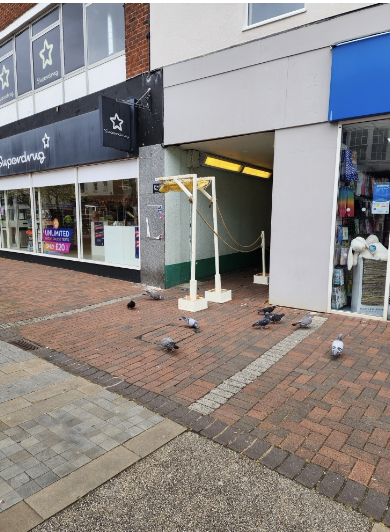
• Apart from that, since it was under a shade, we observed no birds around it.
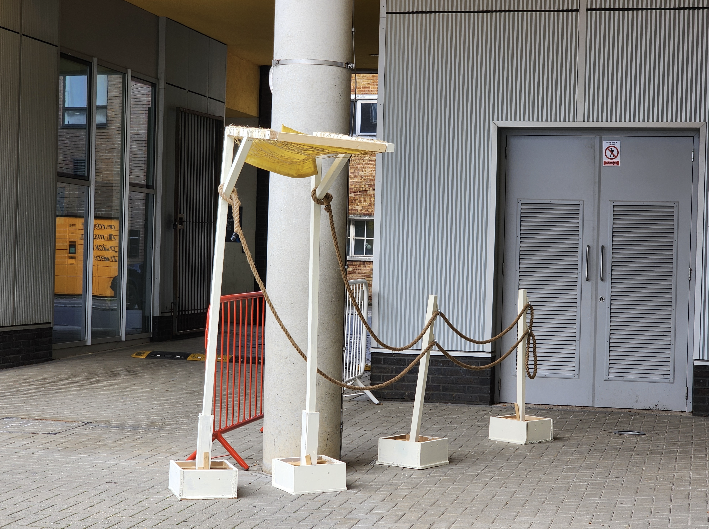
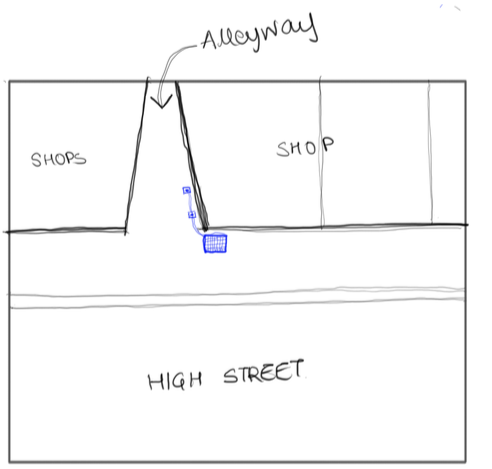
2. Near Alleyway
• When placed partly in the alleyway and partly outside, it also showed almost no interaction with both humans and non-humans.
• Although we received some very curious looks.
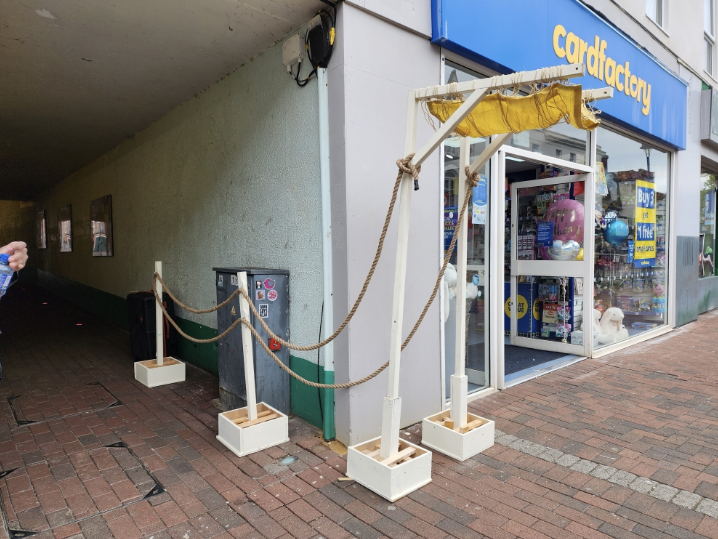
3. In middle of High Street
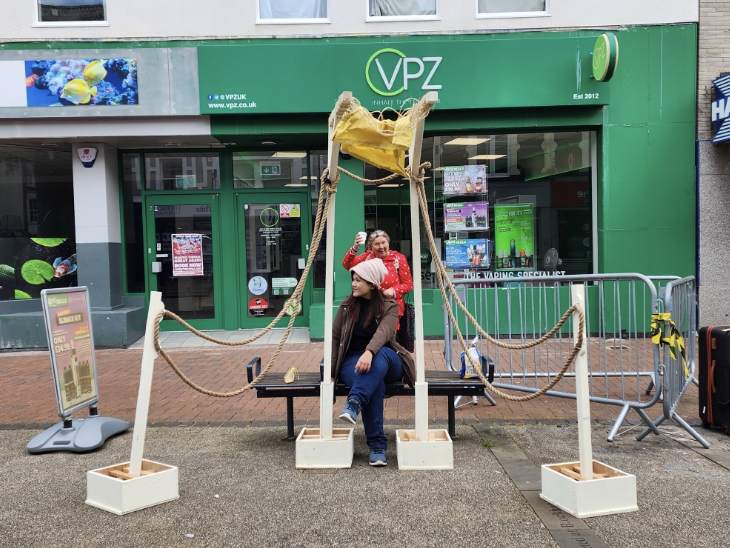
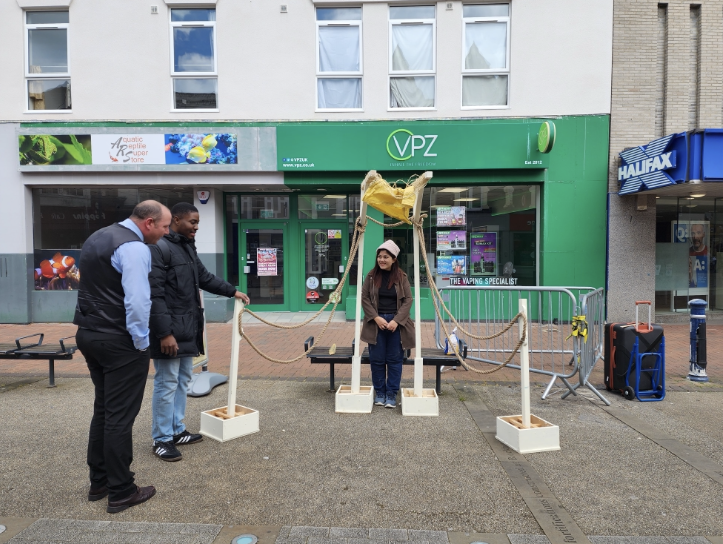
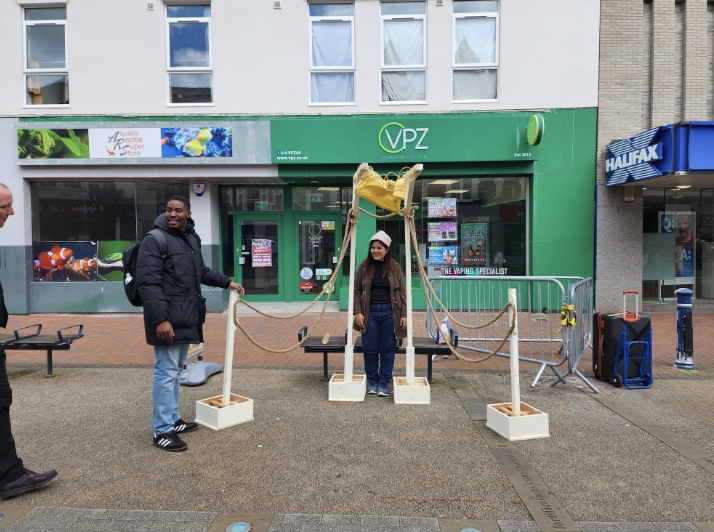
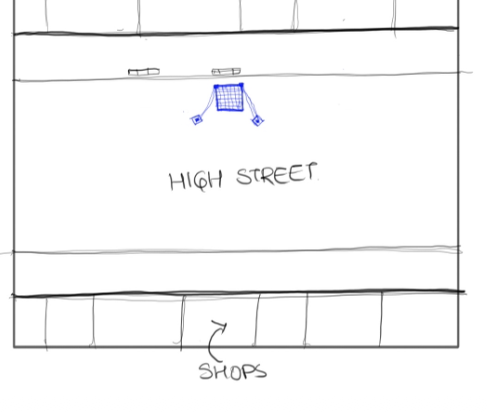
• When placed in the middle of high street, the people around were curious to know and interacted with us but they did not touch the installation.
• Various types of birds, hesitantly came but went away as soon as any human came near them.
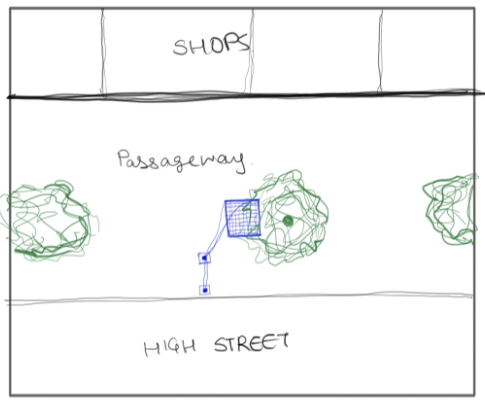
4. Under a tree on High Street
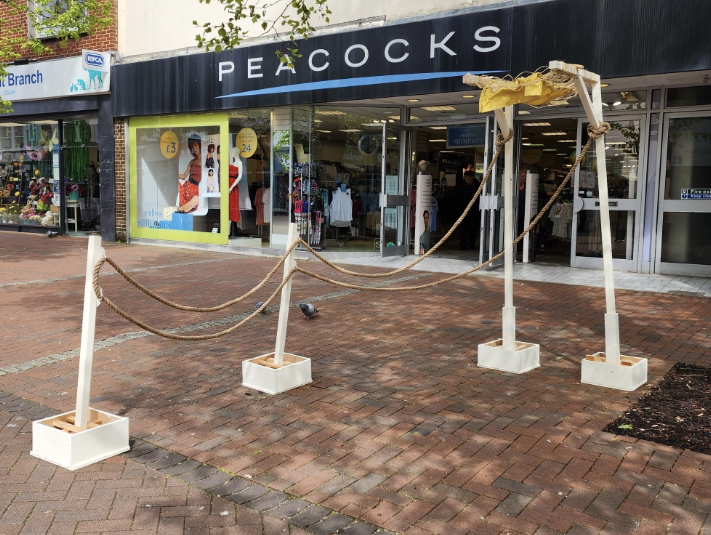
• When placed under the tree in the high street, we observed more birds around the installation.
• People in the shops were curious to know what the installation is about but were hesitant to ask about it.
Construction
Cost- interior paint is better than spray paint (better coverage) for needed application.
Woodworking skills we attained Local hardware stores and limitations that come with them
Sturdiness and structure (connections beyond screws and nails found a sturdy construction)
Transportation
Design inclusivity (as we learned) about different ramps, accessibility, and road textures as we transported it.
Portability (the design was heavy and difficult to transport and reconfigure and too big to be portable for human scale)
Design configuration
Trying to put this intervention in different locations and configurations taught us that an asymmetrical composition helps us use the intervention as a transitional element.
In contrast, a symmetrical composition makes it the focal point and element itself.
Users
Humans handrails are only a luxury of safety as most humans use them only when they feel unsafe.
Design language (to some, it served as an object of execution)
Need for more exciting features to enable interactions
More than humans Birds only decide where they can feed and not be attacked.
Different birds have different feeding patterns and intellect as it go along the food chain/ecosystem Birds and humans do not mix habitats as birds are scared of being prey.
Conclusion
• With this installation, the intra-action between humans, birds and the surroundings is observed.
• It was noticed that the birds did not want to interact with the humans and they occupy the space where there is least human interaction.
• It was also concluded that until we get on the field and experiment, the design is just speculative. On field, various other criteria opens up. For example a few people came to us asking if the ropes are used for hanging; as Gosport and Portsmouth has history of war, it is the cultural and historical thing which cannot be anticipated.
• It is very important to understand the symbolic meaning of the structure, cause of what it might evoke among the living beings.
• The structure should be resilient in nature and should have multiple purposes.
• Even while transporting the structure, it made us aware of the textures and the various height differences on the road, making us notice the surrounding.
• It is very important to remember that the community builds and maintains the structure.